


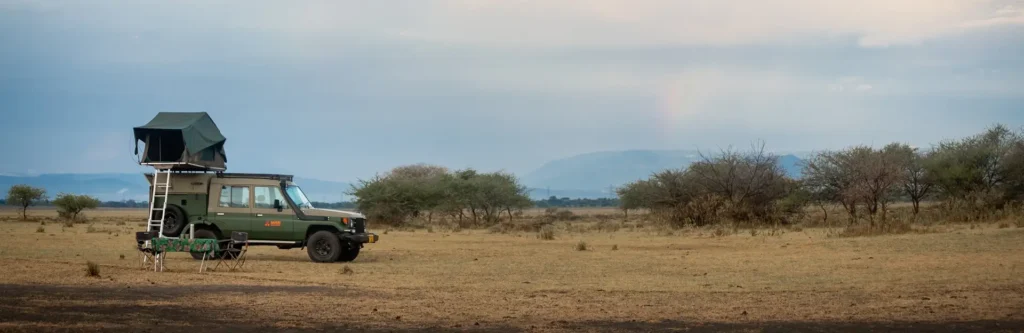
Kenya ranks among Africa’s premier camping safari destinations with diverse landscapes and abundant wildlife. From the iconic Masai Mara plains to remote Samburu wilderness, camping in kenya brings you closer to nature. Self-drive camping offers freedom, flexibility, and authentic bush experiences.
This guide covers everything needed for planning your Kenya camping safari. You will learn about campsite types, best locations, costs, and essential regulations. We focus specifically on self-drive camping travelers seeking independent adventures.
Safari Masters has facilitated camping safaris throughout Kenya for over 14 years. Our equipped vehicles and local expertise help tourists enjoy safe, comfortable bush camping. This guide shares practical knowledge from years of operational experience.
Types of Camping Experiences in Kenya
Kenya offers diverse camping options matching different budgets and comfort preferences. Understanding these categories helps select experiences aligning with your travel style. Each type provides unique advantages for safari adventurers.
Public Campsites (Budget and Wild Experience)
Public campsites operate inside Kenya national parks managed by Kenya Wildlife Service. These basic facilities offer authentic wilderness camping at affordable rates. Most feature simple toilets, sometimes showers, and designated fire pits.
Wildlife sounds surround you throughout nights at public campsites. Lions roar in the distance while hyenas patrol camp perimeters. Rangers provide security but animals occasionally wander through camping areas.
Public Campsite Features:
- Located inside major national parks
- Basic toilet facilities (pit latrines common)
- Cold water showers at some locations
- Shared facilities among all campers
- No electricity or lighting provided
- Ranger patrols for security
Public campsites suit budget-conscious travelers embracing rustic experiences. Prices start around $30-50 per person nightly. Book through the Kenya Wildlife Service website advance during peak seasons.
Private Campsites
Private campsites near park entrances offer enhanced facilities and comfort. These independently operated sites feature hot showers, flush toilets, and sometimes electricity. Many include restaurants, bars, and WiFi access.
Families with children often prefer private campsites for added security and amenities. Proximity to park gates allows early morning game drive starts. However, you sacrifice the complete wilderness immersion of bush camping.
Private Campsite Advantages:
- Hot water showers available
- Flush toilets and better hygiene
- Electricity for charging devices
- On-site restaurants reduce cooking needs
- Safer for families with young children
- Sometimes swimming pools included
Private campsite costs range $15-40 per person nightly. Quality varies significantly between operators. Read recent reviews before booking these facilities.
Special Campsites (Exclusive Wild Camping)
Special campsites provide ultimate wilderness experiences with complete privacy. Kenya Wildlife Service designates these exclusive areas within national parks. Only one group camps at each special campsite nightly.
No permanent facilities exist at special campsites. You bring everything needed including portable toilets. This camping style suits experienced adventurers seeking total immersion. Rangers verify camping permits but you camp completely alone.
Special Campsite Experience:
- Private booking (no shared facilities)
- No permanent structures
- Bring all equipment including toilets
- Ultimate wildlife proximity
- Advanced booking essential (months ahead)
- Higher fees ($100-150 per person nightly)
Special campsites require serious preparation and self-sufficiency. However, the exclusive wildlife encounters justify the effort. Many Safari Masters clients choose special campsites for ultimate safari experiences.
Rooftop Tent Camping (Most Popular for Self-Drive)
Rooftop tent camping dominates self-drive safaris throughout Kenya. These tents mount on 4×4 vehicle roofs providing elevated sleeping platforms. Setup takes just 5-10 minutes after arriving at campsites.
Elevation protects campers from ground-level wildlife encounters. Snakes, scorpions, and curious animals cannot access rooftop sleeping areas. Comfortable mattresses ensure good sleep after long driving days.
Rooftop Tent Benefits:
- Quick setup and pack-down
- Elevated safety from wildlife
- Comfortable mattresses included
- Better ventilation than ground tents
- Space-saving for vehicle interior
- Suitable for all campsite types
Safari Masters provides rooftop tents as part of camping packages. Our Land Cruisers accommodate 2-4 person rooftop configurations. Ground tents supplement rooftop options for larger groups.
Best National Parks and Regions for Camping in Kenya
Kenya’s protected areas offer spectacular camping across varied ecosystems. Each park provides unique wildlife viewing and landscape experiences. Selecting the right parks maximizes your camping safari enjoyment.
Masai Mara National Reserve
The Masai Mara represents Kenya’s premier camping destination with unmatched wildlife density. Over 1.5 million wildebeest migrate through the Mara annually from July through October. Year-round resident wildlife includes lions, elephants, and cheetahs.
Public campsites within the reserve bring you into the heart of the action. Wildlife sounds fill nights while predators hunt nearby. Morning game drives start immediately from your tent.
Masai Mara Camping Highlights:
- Great Migration viewing (July-October)
- Big Five wildlife present year-round
- Multiple public campsites available
- Special campsites offer exclusivity
- Balloon safaris launch from camps
- River crossings visible from some camps
Book Masai Mara campsites 2-3 months ahead during migration season. Costs run higher than other parks at $50 per person nightly. The experience justifies the premium pricing. Learn more about optimal visiting times.
Amboseli National Park
Amboseli offers iconic camping beneath Mount Kilimanjaro’s snow-capped peaks. Large elephant herds congregate around permanent swamps creating spectacular photography opportunities. This compact park suits first-time camping safari travelers well.
Public campsites provide stunning mountain views on clear mornings. Dust storms occasionally sweep through camps during dry seasons. However, wildlife viewing compensates for occasional discomfort.
Amboseli Camping Features:
- Mount Kilimanjaro backdrop photography
- Large elephant population
- Compact park (easy navigation)
- Good for camping beginners
- Reliable wildlife sightings
- Less crowded than Masai Mara
Amboseli camping costs $50 per person nightly at public sites. Private campsites outside the park offer budget alternatives. Combine Amboseli with Tsavo parks for extended southern circuit safaris.
Tsavo East and Tsavo West
Tsavo’s massive twin parks offer remote camping adventures away from tourist crowds. Red dust colors elephants distinctly in this region. Vast landscapes create feelings of true wilderness exploration.
Limited facilities mean serious self-sufficiency requirements. However, adventurous campers appreciate the authentic bush experience. Wildlife concentrations peak near permanent water sources.
Tsavo Camping Appeal:
- Remote wilderness feeling
- Red elephants (iron-rich soil)
- Fewer tourists than Masai Mara
- Large park size (extensive exploration)
- Rock climbing at Tsavo West
- Mzima Springs underwater hippo viewing
Tsavo camping runs $50 per person nightly at public sites. Bring extra water and supplies as facilities remain basic. The parks reward adventurous self-drive camping enthusiasts.
Lake Nakuru National Park
Lake Nakuru provides convenient camping near Nairobi with excellent rhino viewing opportunities. Both black and white rhinos thrive in this compact park. Flamingo populations fluctuate based on water levels.
Good road access makes Lake Nakuru ideal for short camping trips. The park sits just 2-3 hours from Nairobi. Weekend camping trips work perfectly here.
Lake Nakuru Camping:
- Easy access from Nairobi
- Rhino sanctuary status
- Flamingo viewing (seasonal)
- Compact park size
- Good road conditions
- Multiple gate entries
Public campsites cost $50 per person nightly. Private sites outside offer alternatives. Combine Lake Nakuru with nearby Lake Naivasha for extended trips.
Samburu National Reserve
Samburu offers unique northern species unavailable in southern parks. Grevy’s zebras, reticulated giraffes, and Somali ostriches inhabit this arid region. The Ewaso Ng’iro River sustains diverse wildlife concentrations.
Fewer tourists visit Samburu creating intimate camping experiences. Hot days transition to pleasantly cool nights. Cultural interactions with Samburu people enrich visits.
Samburu Camping Appeal:
- Unique northern wildlife species
- Fewer tourist crowds
- Beautiful riverine landscape
- Cultural village visits available
- Dramatic scenery
- Excellent bird watching
Samburu camping costs $70 per person nightly at public sites. Higher fees reflect the reserve’s special status. The unique wildlife justifies the premium pricing.
Diani Beach and Coastal Camping
Coastal camping provides perfect safari-and-beach combination holidays. Diani Beach offers Indian Ocean relaxation after dusty safari adventures. Several beachfront campsites accommodate budget travelers.
Combine inland safari camping with coastal beach days. Most travelers complete safari circuits before heading to coast. The transition from bush to beach creates memorable contrasts.
Coastal Camping Options:
- Beachfront campsites available
- Swimming and snorkeling access
- Seafood restaurants nearby
- Budget accommodation alternative
- Relaxed atmosphere
- Water sports opportunities
Coastal camping costs $10-25 per person nightly. Private beach campsites offer better facilities than budget options. Plan 3-5 beach days after safari adventures.
How Self-Drive Camping Works in Kenya
Self-drive camping combines vehicle rental with independent safari adventures. You control schedules, choose routes, and camp where you prefer. This approach offers maximum flexibility at reasonable costs.
Do You Need a 4×4 for Camping in Kenya?
Yes, 4×4 vehicles prove essential for camping safaris in Kenya. National park roads range from maintained gravel to challenging mud tracks. Standard cars cannot access most camping areas safely.
High ground clearance protects vehicle undercarriages on rough terrain. Four-wheel-drive capability handles muddy conditions during rainy seasons. Rooftop tents require sturdy 4×4 platforms.
Why 4×4 Vehicles Matter:
- Park roads often unmaintained
- River crossings common in parks
- Mud challenges during rains
- Ground clearance prevents damage
- Rooftop tents need stable platforms
- Recovery easier with 4×4 capability
Safari Masters provides well-maintained Land Cruisers at $170 daily. These proven safari vehicles handle all Kenya road conditions. Comprehensive insurance costs just $10 daily additional. Learn about driving requirements before departure.
Rooftop Tent vs Ground Tent – What Is Better?
Both tent types work well for Kenya camping safaris. However, rooftop tents dominate self-drive preferences. Understanding advantages helps choose appropriately.
Rooftop Tent Advantages:
- Elevated safety from wildlife
- Quick 5-10 minute setup
- Comfortable foam mattresses
- Better ventilation and views
- No ground moisture issues
- Animals cannot access
Ground Tent Advantages:
- Lower cost option
- Accommodates larger groups
- More interior space
- Easier for elderly campers
- Can use at any campsite
- Traditional camping feeling
Safari Masters provides both options in camping packages. Our $20 daily camping gear includes either configuration. Rooftop tents suit couples and small groups best. Larger families combine rooftop and ground tents.
How Much Does Camping in Kenya Cost?
Budget planning requires understanding multiple cost components. Camping safaris cost significantly less than lodge-based alternatives. However, several fees accumulate during multi-day trips.
Park Entry Fees
National park entry fees represent substantial camping safari costs. Kenya Wildlife Service charges daily rates for park access. Non-resident tourists pay premium prices supporting conservation.
Sample Park Entry Fees (Non-Resident Adults):
- Masai Mara: $80 per person daily
- Amboseli: $60 per person daily
- Tsavo East/West: $52 per person daily
- Lake Nakuru: $60 per person daily
- Samburu: $70 per person daily
Children ages 3-17 pay 40-50% reduced rates. Entry fees reset every 24 hours from initial entry time. Detailed fee breakdowns appear in our national parks guide.
Campsite Fees
Camping permits add to park entry costs. Public campsites charge separately from entry fees. These nightly fees grant camping privileges within parks.
Campsite Fee Structure:
- Public campsites: $30-50 per person nightly
- Private campsites: $15-40 per person nightly
- Special campsites: $100-150 per person nightly
Book public campsites through Kenya Wildlife Service website. Private sites accept direct bookings via phone or email. Payment accepts credit cards or mobile money.
Vehicle Rental Costs
Safari Masters 4×4 rental provides fully equipped camping vehicles. Our Land Cruisers include comprehensive insurance and unlimited mileage. All mechanical maintenance happens before every rental.
Safari Masters Rental Rates:
- 4×4 Land Cruiser: $170 per day
- Comprehensive insurance: $10 per day
- Camping equipment: $20 per day
- GPS unit: $5 per day (optional)
- Driver guide: $30 per day (optional)
Total vehicle and camping costs run $200 daily. Split among multiple travelers, costs become very reasonable. Four people sharing pay just $50 each daily for transportation and camping gear.
Frequently Asked Questions About Camping in Kenya
Can tourists camp in Kenya?
Yes, tourists legally camp throughout Kenya with proper permits. National parks welcome camping at designated sites. Book public campsites through Kenya Wildlife Service website. Private campsites accept direct reservations. Thousands of international tourists camp safely across Kenya annually.
Is wild camping allowed in Kenya?
No, wild camping outside designated areas remains prohibited in national parks. Kenya Wildlife Service enforces strict camping location rules. However, special campsites provide exclusive wilderness experiences legally. Always obtain proper permits before camping anywhere in Kenya.
Do I need to book campsites in advance?
Yes, advance booking proves essential during peak season from July through October. Popular parks like Masai Mara fill months ahead. Book public campsites through the KWS website 2-3 months early. Low season allows more flexibility but booking remains recommended.
Is rooftop tent camping safe in Africa?
Yes, rooftop tent camping provides excellent safety throughout Africa. Elevation protects from ground-level wildlife including snakes and insects. Thousands use rooftop tents across African safaris without incidents. Proper setup and following guidelines ensures complete safety.
What animals come into campsites?
Elephants, buffaloes, hyenas, and various antelope species occasionally wander through campsites. Monkeys and baboons investigate camps for food during daytime. Large predators rarely enter camps but lions sometimes pass nearby. Stay inside tents at night and never approach any wildlife.
Can I bring my own camping gear to Kenya?
Yes, tourists can bring personal camping equipment. However, airlines charge for excess baggage significantly. Renting locally eliminates transport hassles and costs. Safari Masters provides quality gear eliminating need for personal equipment.
Do campsites have electricity?
Public campsites inside national parks lack electricity completely. Private campsites outside parks sometimes offer electrical hookups. Bring power banks and car charging cables for device power. Solar panels work well for extended camping trips.
Are campfires allowed in Kenya parks?
Campfires are allowed only in designated fire pits at campsites. Cutting firewood within parks remains strictly prohibited. Bring charcoal from outside parks or purchase from camp staff. Always extinguish fires completely before sleeping.