


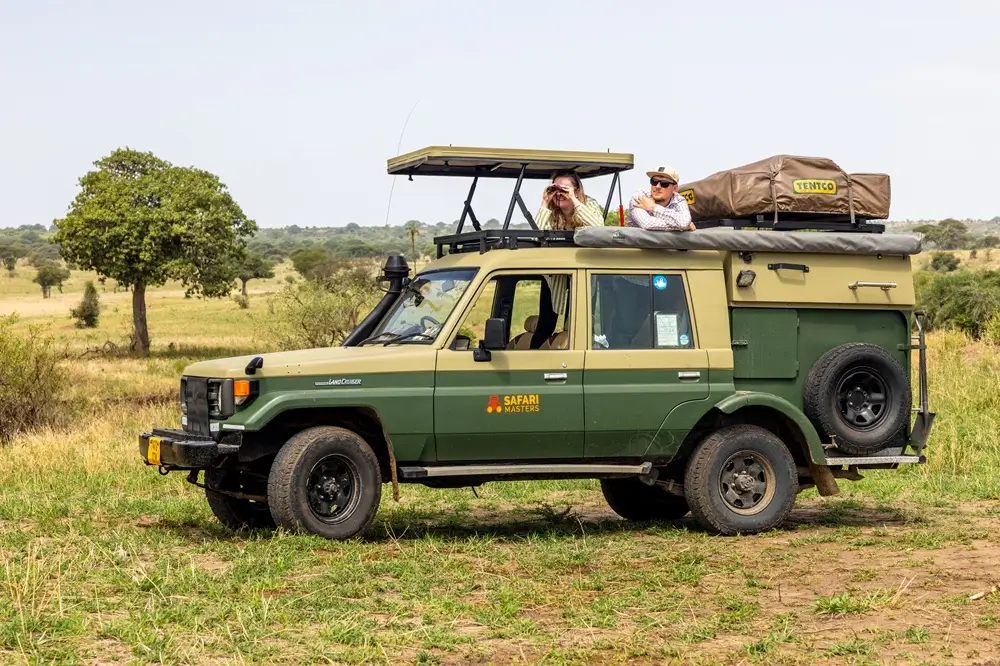
Imagine waking up in your rooftop tent as the sun rises over the Serengeti plains, lions roaring in the distance, and knowing you can spend the entire day following wildlife at your own pace. This is the magic of a self drive Serengeti safari.
Unlike guided tours where schedules dictate your movements, self-drive safaris put you in complete control. You decide when to wake up, how long to watch that leopard in the tree, and where to have lunch while elephants graze nearby. Safari Masters has helped hundreds of independent travelers explore the Serengeti this way over our 14 years in East Africa.
This guide covers everything you need to know: whether self-driving is right for you, the best routes through the park, practical logistics like fuel and camping, and how to make the most of your Serengeti adventure. We share real experience from both our team and our clients who have successfully navigated these iconic plains independently.
What is a Self-Drive Serengeti Safari?
A self-drive safari means you rent a 4×4 vehicle and explore Serengeti National Park on your own, without a professional guide or driver. You navigate the park roads yourself, find wildlife independently, and manage your own schedule completely.
This differs dramatically from traditional guided safaris where you join a group or hire a private guide. Instead of sitting in the back seat while someone else drives and spots animals, you are behind the wheel making all the decisions.
Who Chooses Self-Drive Serengeti Safaris?
Self-drive appeals to specific types of travelers:
Independent spirits who prefer making their own discoveries rather than following someone else’s agenda. These travelers enjoy the challenge and satisfaction of finding that cheetah hunting without anyone pointing it out.
Budget-conscious adventurers who want to experience the Serengeti without paying premium guided safari rates. Sharing a rental vehicle and camping costs significantly less than joining organized tours.
Photography enthusiasts who need unlimited time at sightings. Professional and serious amateur photographers appreciate waiting hours for perfect light without worrying about other clients getting impatient.
Experienced safari-goers who have done guided trips before and want a different, more immersive experience. These travelers know what to expect and feel confident navigating themselves.
Quick Pros and Cons
The freedom feels incredible. You watch wildlife as long as desired, change plans spontaneously, and experience genuine discovery. Self-drive costs 40-60% less than guided safaris for the same duration. You develop deeper appreciation for the ecosystem by actively finding animals yourself.
However, you assume all responsibility for navigation, vehicle problems, and safety. You might miss subtle wildlife signs that guides would notice. Park rules are strict and you must follow them without guidance. Some people find the logistics stressful rather than exciting.
Safari Masters provides the middle ground. We supply reliable vehicles, comprehensive briefings, route suggestions, and 24/7 support while you maintain complete independence on the road.
Is Self-Driving in Serengeti Allowed and Safe?
Yes, self-drive is absolutely allowed in Serengeti National Park. Many travelers do not realize this possibility exists, but Tanzania National Parks Authority (TANAPA) welcomes independent visitors in properly equipped vehicles.
You face no restrictions that guided vehicles do not. The same roads, campsites, and viewing areas remain accessible. Rangers at gates verify your vehicle meets basic standards and that you carry proper documentation, then grant full access.
Safety Considerations
The Serengeti is genuinely safe for self-drive when you prepare properly and follow rules. Road quality varies from well-graded main routes to rough tracks requiring slow, careful driving. Most roads remain passable for high-clearance 4×4 vehicles during dry seasons.
Wildlife encounters require common sense and caution. Animals sometimes approach vehicles closely or cross roads unexpectedly. Elephants with calves, buffalo herds, and lions hunting near roads demand patient, respectful distance. Stay in your vehicle always except at designated picnic sites.
Vehicle breakdowns happen occasionally despite good maintenance. Carrying spare tires, basic tools, extra water, and emergency communication proves essential. The park is vast and help can take hours to arrive. Self-sufficiency matters enormously.
Getting stuck in mud or sand occurs during rainy seasons even on main roads. Black cotton soil becomes treacherous when wet. Recovery requires proper technique, equipment, and sometimes assistance from other travelers or park rangers.
Who Should NOT Self-Drive
First-time Africa visitors with zero 4×4 experience face steep learning curves. Combining unfamiliar terrain, wildlife proximity, and vehicle management simultaneously overwhelms some people. Consider a guided safari first to understand the environment.
Very short trips (1-2 days) barely justify the logistics and effort. You spend limited time actually enjoying the park. Guided options make more sense for brief visits.
Travelers with significant mobility issues find camping challenging. Public campsites lack accessibility features. Lodge-based self-drive works but limits budget advantages.
People extremely anxious about navigation or mechanical problems will not enjoy the independence. The stress outweighs the freedom for these travelers.
Best Time to Visit Serengeti on a Self-Drive
Dry season months from June through October offer ideal conditions for first-time self-drivers. Roads remain firm and predictable. You navigate with confidence knowing sudden rains will not trap you. Wildlife concentrates around permanent water sources making sightings more reliable.
September and October provide exceptional value. The Great Migration herds move north toward the Mara River. Fewer tourists mean quieter roads and campsites. Prices drop slightly compared to peak July-August.
December through March works well but requires different planning. Short rains in November may leave some roads muddy into early December. However, the southern Serengeti comes alive during calving season in January-February. Thousands of wildebeest give birth on the short grass plains creating predator action.
April and May present challenges for self-drivers. Heavy long rains turn many tracks into mud pits. Black cotton soil areas become completely impassable. Experienced overlanders handle this season but beginners should avoid it. Wildlife viewing remains excellent though, and you will have the park nearly to yourself.
Timing Your Visit to the Great Migration
The migration follows predictable patterns through Serengeti:
January-March: Southern plains and Ndutu area for calving season April-May: Central Serengeti as herds move north June-July: Western corridor toward Grumeti River August-October: Northern Serengeti and Mara River crossings November-December: Movement back south toward short grass plains
Self-drive allows you to position yourself in the right area for your visit dates. You cannot “chase” the migration daily in a self-drive vehicle. Instead, you stay in one sector where herds are expected that month.
Safari Masters provides current migration position updates before your departure. We suggest the best sectors for your specific travel dates based on recent reports from the park.
Self-Drive Serengeti Routes and Itineraries
Main Entry Gates and Access Points
Naabi Hill Gate serves as the primary self-drive entry for most travelers. Located on the southeastern boundary, you reach it from Arusha via Ngorongoro Conservation Area. The 180-kilometer drive from Arusha takes 5-6 hours including Ngorongoro Crater rim views.
Naabi Hill offers spectacular scenery and usually provides your first Serengeti wildlife sightings. The gate includes a small museum and picnic area. From here, the main road to Seronera (central Serengeti) passes through classic savannah teeming with animals.
Other access points suit different itineraries:
Ngorongoro route: Most common for self-drivers combining both destinations Ndabaka Gate (west): For travelers approaching from Lake Victoria or after visiting Rubondo Island Lobo/Ikoma area (north): Less common, connects to western Serengeti routes Klein’s Gate (north): Near the Kenyan border, used for exits toward Masai Mara
Choose your entry based on your full itinerary. Most self-drivers enter via Naabi Hill and exit the same way or through western/northern gates depending on their route.
Classic 3-Day Self-Drive Serengeti Itinerary
This represents the minimum time we recommend for self-drive. Shorter trips feel rushed and barely justify the logistics.
Day 1: Enter and Explore Southern Serengeti
Depart Arusha or Karatu early (6:00-7:00 AM) after collecting your rental vehicle the previous day. Drive through Ngorongoro Conservation Area (pay fees at Loduare Gate) and descend into the Serengeti at Naabi Hill Gate.
Complete park entry formalities, which take 30-45 minutes. Begin game driving immediately after exiting the gate. The Gol and Simba Kopjes areas host resident lions, cheetahs, and abundant prey species.
Drive slowly toward Seronera (central Serengeti), approximately 75 kilometers taking 3-4 hours with wildlife viewing stops. Arrive at your campsite mid-afternoon, set up camp, and take a sunset game drive in the Seronera area.
Overnight at Seronera Public Campsite or nearby lodges if you prefer more comfort.
Day 2: Full Day Central Serengeti
Wake before sunrise for the best wildlife viewing hours. Dawn and early morning offer coolest temperatures when predators remain active. Spend 3-4 hours driving the Masai Kopjes circuit and areas around Lake Magadi.
Return to camp around 10:00 AM for brunch and rest during midday heat. Most animals rest as well, making midday driving less productive.
Depart for afternoon game drive around 3:30-4:00 PM. Explore different areas like Moru Kopjes or the Seronera River loop. Return to camp after sunset (driving must cease by 6:00 PM).
Day 3: Morning Game Drive and Exit
Another early morning game drive in Seronera or begin driving north toward Lobo if migration timing suits it. Exit the park by mid-morning via Naabi Hill or continue north if heading to Masai Mara.
Drive back to Arusha (or onward to your next destination), arriving late afternoon.
This basic itinerary can be extended or modified based on your interests and migration timing.
5-7 Day Self-Drive Serengeti & Ngorongoro Loop
Longer trips allow comprehensive exploration across multiple sectors.
Suggested 7-Day Loop:
Day 1: Arusha to Ngorongoro Crater rim, descend into crater for game drive, ascend and drive to Ndutu area (southern Serengeti), camp near Ndutu
Day 2: Full day Ndutu area (best January-March for calving), camp Ndutu
Day 3: Drive north through central Serengeti to Seronera, afternoon game drive, camp Seronera
Day 4: Full day central Serengeti exploring different circuits, camp Seronera
Day 5: Drive north to Lobo area, game drive en route, camp Lobo
Day 6: Full day northern Serengeti and Mara River area, camp Lobo
Day 7: Morning game drive, exit via northern gates or return south toward Arusha
This loop covers the park’s diversity and allows rest days. You are not rushing between destinations constantly.
Where to Add Rest Days
Build in buffer days at Seronera (central hub) or your preferred sector. Rest days allow vehicle maintenance checks, campsite laundry, and relaxation. You still do morning and afternoon game drives but enjoy midday downtime.
Long transit days between far-flung camps tire everyone. Break up drives with extra nights at strategic locations.
Recommended Driving Routes Inside the Park
Naabi Hill Gate to Seronera (75 km, 3-4 hours with game viewing)
This main route remains well-graded and passable year-round except during heaviest rains. You pass the scenic Gol Kopjes (excellent for cheetahs) and Simba Kopjes (lion pride territory). The road crosses open plains then enters more wooded areas approaching Seronera.
Drive slowly (20-30 km/h) scanning for wildlife. Stopping frequently for sightings makes this segment delightfully long. Do not rush this drive trying to reach camp quickly.
Seronera to Lobo (80 km, 3-4 hours)
This northern route traverses changing landscapes from central woodlands to northern hills. Road conditions vary from good gravel to rough tracks. The route rewards with excellent wildlife diversity and stunning scenery.
Consider this route during August-October when migration herds move north. The drive itself becomes an all-day game viewing experience.
Seronera to Western Corridor (Variable distances)
Western routes toward Grumeti River and beyond suit June-July visits when migration moves through this sector. Roads are less developed than the main Naabi-Seronera-Lobo spine. High clearance proves essential.
This area sees fewer vehicles creating a wilderness atmosphere. Plan extra time for slower progress on rougher tracks.
Park Rules, Permits and Fees for Self-Drive
Park Fees Structure
Serengeti National Park charges multiple fee categories:
Park entry (conservation fee): $70 per person per day for foreign non-residents (24-hour period from entry time) Vehicle fee: $40-200 depending on vehicle type and registration (foreign-plated vehicles pay more) Camping fee: $30-50 per person per night depending on campsite type Additional fees: Guide fees if you hire one, crater service fees if entering Ngorongoro
Children ages 5-15 pay reduced rates. Under 5 years enter free.
Calculate total costs for your specific group size and trip length. For example, two people with one vehicle for three days/two nights:
- Entry: 2 people x $70 x 3 days = $420
- Vehicle: $40 x 3 days = $120
- Camping: 2 people x $30 x 2 nights = $120
- Total: $660 plus Ngorongoro fees if entering that way
Where and How to Pay
Pay park fees online through the TANAPA website before arrival (recommended) or at park gates in cash US dollars. Online payment through the TANAPA Card system proves easiest and saves time at gates.
At gates, payments can take 30-60 minutes during busy periods. Have exact cash amounts if paying on-site. Credit cards work inconsistently at remote gates.
Safari Masters includes fee payment assistance in our rental packages. We help navigate the online system or provide proper documentation for gate payment.
Gate Opening Times and Driving Hours
Gates open at 6:00 AM and close at 6:00 PM typically. You must enter and exit during these hours. Plan arrivals with buffer time for unexpected delays.
Absolutely no driving is permitted after 6:00 PM inside the park. This strict rule protects both wildlife and visitors. Rangers issue substantial fines for violations. Being on the road after dark risks animal collisions and can result in park expulsion.
Plan daily drives ensuring return to camp well before 6:00 PM. Unexpected sightings or slower progress can delay you. Leave margin for error.
Critical Self-Drive Rules
Breaking these rules results in fines, expulsion, or legal troubles:
Stay on designated tracks always. No off-road driving under any circumstances, even short distances. This protects fragile ecosystems and prevents soil erosion.
Maintain minimum 25-meter distance from wildlife. Closer approaches stress animals and break regulations. Use binoculars and telephoto lenses for close-up views.
Never exit your vehicle except at designated picnic sites, campsites, and visitor centers. Wildlife attacks happen to people who exit vehicles in prohibited areas.
No drones or aircraft without special permits from TANAPA and Civil Aviation Authority. Drones disturb wildlife and violate park regulations.
Speed limit 50 km/h maximum on all park roads. Lower speeds (20-40 km/h) suit wildlife viewing and road conditions anyway.
No littering. Carry all trash out of the park. Camps provide minimal waste facilities.
No feeding animals or interfering with wildlife behavior in any way.
Rangers patrol regularly and other visitors report violations. Follow rules scrupulously.
Choosing the Right 4×4 for Serengeti Self-Drive
Recommended Vehicle Types
Toyota Land Cruiser represents the gold standard for Serengeti self-drive. These workhorses handle rough roads reliably, offer excellent visibility through roof hatches, and provide proven reliability. Safari Masters maintains a fleet of Land Cruisers specifically prepared for self-drive safaris.
Land Rover Defenders suit experienced drivers comfortable with older vehicle quirks. These British classics offer excellent off-road capability and safari cachet. However, they require more mechanical sympathy than Land Cruisers.
Toyota Hilux double-cab pickups work well for couples or small groups willing to sacrifice some interior space for ruggedness. Mounting rooftop tents on these provides comfortable camping setup.
Must-Have Features
Your vehicle absolutely requires:
High ground clearance (minimum 20-22 cm): Essential for rutted tracks and crossing small water courses. Standard SUVs lack sufficient clearance for many Serengeti roads.
Low-range four-wheel drive: Critical for mud, sand, and steep inclines. Two-wheel drive or all-wheel drive without low range proves inadequate.
Dual spare tires: Remote location and rough roads make punctures likely. One spare is insufficient for multi-day trips.
Long-range fuel tank or jerry cans: Fuel availability in the park is extremely limited. Seronera has a fuel station but cannot be relied upon. Carrying 200+ km range proves essential.
Refrigerator or cool box: Food spoilage in African heat happens rapidly. Cold drinks and fresh food improve comfort dramatically.
Roof hatch or pop-up roof: Wildlife viewing and photography require standing height visibility. Trying to photograph from side windows proves frustrating and limits views.
Recovery equipment: Tow rope/strap, shovel, traction boards help extract stuck vehicles. Fellow travelers often assist but you need proper gear.
Compressor: Deflating tires improves traction in sand/mud. You must reinflate before returning to normal roads.
Camping-Equipped 4×4 vs Lodge-Based Self-Drive
Rooftop tent camping provides the authentic Serengeti experience. You sleep in the bush hearing nocturnal sounds. Costs stay minimal. Set-up becomes quick with practice (15-20 minutes). However, facilities are basic and comfort is rustic.
Ground camping requires more equipment but costs even less. You need quality tents, sleeping gear, and camping furniture. Setup takes longer and security feels less certain than rooftop tents.
Lodge-based self-drive eliminates camping logistics but increases costs dramatically. You still navigate and drive yourself but return to comfortable beds and hot showers. This hybrid approach suits travelers wanting independence without camping challenges.
Mix-and-match works well: camp in the park but splurge on lodges at the beginning and end of trips.
Safari Masters rents vehicles with or without camping equipment. Our camping packages include everything needed: rooftop tents, cooking gear, chairs, tables, bedding.
Navigation and Route Planning
Best Navigation Tools
Multiple navigation options exist for Serengeti. Using several together provides redundancy when technology fails.
Tracks4Africa GPS maps: Specifically designed for African travel, these show actual drivable tracks, campsites, fuel stations, and points of interest. Maps work offline on dedicated GPS units or smartphone apps. Many self-drive veterans consider these essential.
Maps.me: Free offline mapping app with reasonable Serengeti coverage. User-contributed data includes campsite locations and basic routes. Not as detailed as Tracks4Africa but serviceable.
Offline Google Maps: Download the Serengeti area before departure. Coverage varies in quality but provides backup navigation. Satellite imagery helps identify terrain.
Paper maps: TANAPA sells official Serengeti maps at park gates and visitor centers. These show main roads, campsites, and geographic features. Paper never runs out of batteries and provides excellent trip planning overview.
Safari Masters provides pre-loaded GPS units with current Serengeti tracks. We also supply paper maps and pre-departure briefing showing recommended routes based on your dates and migration position.
Understanding Serengeti Road Types
Roads range from well-maintained graded tracks to barely-visible wheel ruts through grass.
Main roads (Naabi-Seronera-Lobo): Graded regularly, passable year-round in high-clearance 4×4. These can still have corrugations causing jarring rides and slow progress.
Secondary circuits (Kopjes loops, river circuits): Less maintained, rougher surfaces, more challenging navigation. These reward with better wildlife and fewer tourists.
Tracks through grass: Visible but primitive, require careful route-finding. Only attempt these when dry and with proper recovery gear.
Black cotton soil areas: Found in parts of southern and western Serengeti. When wet, this clay becomes impossibly slippery. Even the best 4×4 gets hopelessly stuck. Avoid these areas during rains.
Average Driving Speeds and Daily Distances
Expect average speeds of 20-30 km/h including wildlife viewing stops. On the best roads without stops, you might average 40-50 km/h. This is dramatically slower than normal highway driving.
A “short” 50 km drive easily takes 2-3 hours when you stop for wildlife properly. This is normal and expected. Rushing through defeats the purpose of being there.
Plan daily driving distances conservatively. Attempting 150+ km days exhausts everyone and reduces wildlife enjoyment. Better to drive 50-80 km with ample viewing time than racing to cover more ground.
Remember that driving ends at 6:00 PM. Calculate back from that deadline when planning afternoon departures from camps.
Fuel, Food and Supplies Logistics
Fuel Availability and Planning
Serengeti’s vast size (14,750 square kilometers) combined with extremely limited fuel makes this a critical planning element.
Seronera fuel station exists but cannot be relied upon. It sometimes runs dry. Hours are irregular. Even when operational, queues can be long. Never assume you will refuel there.
Fill up completely in Arusha or Karatu before entering the park. These towns have multiple reliable fuel stations. Top off your tank the evening before departure and again morning of departure if possible.
Calculate your fuel range carefully. Most Land Cruisers carry 90-100 liters stock. Add supplementary jerry cans for longer trips. Budget approximately 15-20 liters per 100 km for game drive speeds (slower driving uses more fuel).
For a typical 3-day trip covering 400-500 km total, you need 80-100 liters minimum. Longer trips require multiple jerry cans.
Food and Water Shopping
Buy all food and drinking water before entering Serengeti. The park has no shops. Some lodges sell limited supplies at inflated prices but do not depend on this.
Karatu offers better shopping than Arusha for park-bound travelers. Stock up on:
- Drinking water (5+ liters per person per day in hot months)
- Non-perishable foods: rice, pasta, canned goods, cereals
- Fresh fruits and vegetables (hardy varieties like carrots, apples, oranges)
- Meat (if you have refrigeration)
- Bread, spreads, cheese
- Coffee, tea, long-life milk
- Snacks: nuts, dried fruit, cookies, chocolate
- Cooking oil, salt, spices
Cooler/Fridge Management
If your vehicle has a compressor fridge, it runs off the vehicle battery. This keeps food cold reliably. Turn it off overnight to preserve battery unless you want frozen items by morning.
Without a fridge, use a good quality cool box with ice. Ice lasts 2-3 days in good cool boxes. Plan menus around perishable items early in the trip and non-perishables later.
Daily Food Planning for Self-Caterers
Breakfast: Quick options like cereal, instant coffee, fruit. You want to start game drives early, not spend an hour cooking elaborate breakfast.
Lunch/Brunch: Often taken as late breakfast after morning game drive. Sandwiches, salads, leftovers from dinner. Eat at your campsite or designated picnic areas (never outside vehicle elsewhere in the park).
Dinner: The meal you have time to cook properly. Pasta dishes, rice with vegetables/sauce, grilled meat if you brought it. Cooking over campfire or portable stove becomes part of the experience.
Safari Masters provides complete camping kitchen setups with our equipped vehicles: stove, pots, utensils, dishes, coolers. We also offer pre-arranged meal packages from Karatu suppliers if you prefer not shopping yourself.
Campsites and Accommodation for Self-Drivers
Public Campsites in Serengeti
Public campsites offer the most affordable and authentic Serengeti accommodation. These basic facilities exist throughout the park in key areas.
Seronera Public Campsites (several including Ngiri, Tumbili, and others) remain the most popular. Located near the central Seronera visitor center and airstrip, these provide good wildlife access and relative convenience.
Facilities include:
- Long-drop pit latrines (bring toilet paper)
- Sometimes running water for washing (not always reliable)
- No showers (baby wipes and bottlenecks become your hygiene tools)
- No electricity
- No fences or barriers
Wildlife walks through camps constantly. Elephants, buffaloes, hyenas, and occasionally lions pass nearby. This provides thrilling proximity but requires vigilance. Never walk around camp after dark without flashlights and awareness.
Other public campsites exist in Lobo (north), Pimbi and Kirawira (west), and Ndutu area (south). All have similar basic facilities.
Book public campsites through TANAPA before arrival. Reservations ensure space during busy seasons and simplify gate entry.
What to Expect from Public Camping
Understand that facilities are genuinely basic. “Rustic” might be too generous. Think functional rather than comfortable. You are camping in authentic wilderness.
Toilets are pit latrines that smell unpleasant and attract flies. Some camps have communal washing areas with cold water from taps (when working). Most have nothing beyond toilets.
Security comes from rangers who visit occasionally, not constant presence. Lock valuables in your vehicle. Most campers experience no security issues but vigilance helps.
Noise occurs naturally. Animals making sounds, wind, other campers, ranger patrols. Light sleepers should bring earplugs.
The incredible night sky makes up for any discomfort. Far from light pollution, Serengeti stars appear in stunning clarity. The Milky Way stretches overhead brilliantly.
Special Campsites and Lodges
Special (Private) Campsites offer isolation and enhanced experience. These exclusive sites accommodate one group only (up to six people typically). Located in remote areas, they provide the ultimate wilderness camping.
No facilities exist at special campsites – literally nothing. You must be completely self-sufficient. However, the solitude and prime locations make this incredibly appealing to experienced campers.
Special campsites cost $50 per person per night (higher than public sites) and require booking through TANAPA well in advance. These sell out quickly during high season.
Mixing Camping and Lodges
Many self-drivers combine camping with occasional lodge nights for variety. This makes sense when:
- You want hot showers and comfortable beds periodically
- Bad weather makes camping unpleasant
- You are transitioning between park sectors
- You want to splurge for special occasions
Mid-range lodges near Seronera, Lobo, and other areas welcome self-drive guests. Book these in advance during peak season. Last-minute availability can be slim.
This hybrid approach balances budget, adventure, and comfort.
Booking Process and Lead Times
For Public Campsites:
Book through TANAPA’s online booking system (www.tanzaniaparks.go.tz) or through registered tour operators. Payment happens via the system.
Book 2-3 months ahead for high season visits (June-October, January-February). Low season allows more flexibility but booking ahead still wise.
Confirmation emails serve as proof for gate entry. Print these and carry hard copies.
For Special Campsites:
Same process through TANAPA but competition is fierce. Book 3-6 months ahead minimum. Especially popular sites (Moru Kopjes, prime northern areas) fill up a year in advance sometimes.
Safari Masters Booking Assistance:
We simplify this process for our rental clients. Tell us your dates and preferred areas, and we handle TANAPA bookings as part of our service. This eliminates language barriers, payment hassles, and navigation of the sometimes-challenging TANAPA website.
Wildlife Viewing Strategy for Self-Drivers
Best Times of Day
Dawn and the first three hours after sunrise offer peak viewing. Temperatures stay cool and predators remain active from night hunting. Herbivores feed actively before daytime heat.
Wake at 5:30-6:00 AM, have quick coffee, and depart camp immediately after sunrise (around 6:30 AM depending on season). Drive until 10:00-11:00 AM when heat builds and animal activity drops.
Afternoon game drives work best starting 3:30-4:00 PM. The final two hours before 6:00 PM sunset provide fantastic light for photography and increased animal movement as temperatures cool.
How to Find Wildlife Without a Guide
Self-drivers discover they can locate animals successfully with practice and observation.
Read the landscape: Animals congregate near water during dry season. Scan waterholes, rivers, and marshy areas. Kopjes (rocky outcrops) attract lions that rest in shade.
Watch for vultures: Circling vultures indicate kills. This leads you to predator action. However, expect competition from other vehicles at obvious sightings.
Look for vehicle clusters: Unfortunately, tourist vehicles congregating usually means good sighting. Approach slowly and ask what they found before adding to the crowd.
Drive slowly and scan constantly: Wildlife hides remarkably well. Slow speeds (15-20 km/h) and constant scanning increase spotting success.
Early morning tracks tell stories: Fresh tracks in dust show overnight animal movement. Following these sometimes leads to the animals.
Listen: Elephant rumbles, lion roars, hyena whoops, and alarm calls all provide audio clues.
The more time you spend watching, the better you become at reading signs and anticipating where animals might be.
Example Daily Game Drive Schedule
6:30 AM: Depart camp, drive to promising area (kopjes, river, plains)
6:30-10:30 AM: Active game driving with frequent stops for sightings
10:30 AM: Return to camp or find shaded picnic spot
11:00 AM-2:00 PM: Brunch, rest, read, nap, vehicle check, plan afternoon route
3:30 PM: Depart for afternoon drive
3:30-5:45 PM: Game drive with focus on different area than morning
5:45 PM: Head back toward camp to arrive before 6:00 PM dark deadline
6:00 PM: In camp, prepare dinner, share stories around campfire
This schedule balances wildlife viewing with necessary rest and vehicle time limits.
Great Migration and Where to Drive
The Great Migration represents Africa’s most spectacular wildlife phenomenon. Understanding the migration circuit helps self-drivers position themselves optimally.
Short Migration Explanation
Approximately 1.5 million wildebeest, 400,000 zebras, and 300,000 Thomson’s gazelles move through the Serengeti-Mara ecosystem following rainfall and fresh grass. This endless journey has no true beginning or end – it is a continuous cycle.
The herds split and reform throughout the year. You rarely see all 1.5 million animals in one place. Instead, massive aggregations form in certain areas during predictable periods.
Where to Self-Drive Different Months
January-March: Southern Plains and Ndutu
Calving season brings herds to the short grass plains between Ndutu and the Ngorongoro border. February alone sees 400,000+ calves born. Predators gorge on easy prey. This period offers phenomenal viewing.
Self-drivers should base around Ndutu area campsites. Day drives through the southern plains and Gol Kopjes prove highly productive.
April-May: Central Serengeti
Long rains disperse herds as grass grows everywhere. Animals spread across central and western areas. Migration viewing becomes less dramatic but wildlife remains abundant. Fewer tourists make this peaceful.
Base at Seronera for access to central Serengeti.
June-July: Western Corridor
Herds move west toward the Grumeti River. River crossings happen though less spectacularly than northern Mara River crossings later. The western corridor roads suit experienced self-drivers better due to rougher conditions.
August-October: Northern Serengeti and Mara River
The famous Mara River crossings occur during these months. Massive herds gather at crossing points sometimes for days before attempting the dangerous plunge. Crocodiles wait below. This represents the migration’s most dramatic chapter.
Northern Serengeti around Lobo and Kogatende areas provide best access. Be prepared for crowds at known crossing points. Sometimes you get lucky with crossings, sometimes herds just graze nearby.
November-December: Moving South
Short rains trigger the return south. Herds often scatter during this transition. December can be excellent around Seronera as animals funnel through central areas heading south.
Realistic Expectations for Self-Drivers
You cannot “chase” the migration moving camp every day. This requires guided safari flexibility and expense. Instead, self-drivers should camp in the sector where migration is expected during their specific dates.
Even if herds are not directly in your area, you will see wildlife. The Serengeti teems with resident animals year-round. “Migration season” means extra millions of animals, but the park is never empty.
Do not stress about seeing the perfect Mara crossing or massive herds. Whatever you encounter will be spectacular.
Costs and Budgeting a Self-Drive Serengeti Trip
Main Cost Components
Self-drive Serengeti safaris involve several distinct expense categories:
Vehicle Rental: $100-200 per day depending on vehicle type and included equipment. Safari Masters’ Land Cruisers cost $170 daily including insurance and unlimited mileage.
Camping Equipment: $20-30 per day if renting (included in our camping packages). If you bring your own gear, this cost disappears.
Park Entry Fees: $70 per person per day (24-hour periods)
Vehicle Fees: $40-200 per day depending on vehicle registration
Camping Fees: $30-50 per person per night depending on campsite type
Fuel: Budget $50-80 per day depending on driving amount
Food: $15-30 per person per day for self-catering (versus $50-100 in lodges)
Ngorongoro Fees (if entering that route): Approximately $70-100 per person total
Sample Budget: Two People, 3 Days/2 Nights
- Vehicle rental: $170 x 3 = $510
- Park entry: 2 people x $70 x 3 = $420
- Vehicle fees: $40 x 3 = $120
- Camping: 2 people x $30 x 2 = $120
- Fuel: $70 x 3 = $210
- Food: 2 people x $25 x 3 = $150
- Total: $1,530 ($765 per person)
Sample Budget: Two People, 7 Days/6 Nights
- Vehicle rental: $170 x 7 = $1,190
- Park entry: 2 people x $70 x 7 = $980
- Vehicle fees: $40 x 7 = $280
- Camping: 2 people x $30 x 6 = $360
- Fuel: $70 x 7 = $490
- Food: 2 people x $25 x 7 = $350
- Total: $3,650 ($1,825 per person)
Add Ngorongoro fees if entering that route (approximately $100 per person).
Self-Drive vs Guided Safari Cost Comparison
Comparable 7-day guided camping safaris cost $2,500-3,500 per person minimum. Mid-range lodge-based guided safaris run $3,500-5,000 per person. Luxury guided safaris exceed $5,000-8,000 per person easily.
Self-drive at $1,825 per person represents 40-60% savings compared to budget guided options. The more people sharing the vehicle, the lower per-person costs become.
However, guided safaris include guide expertise, guaranteed wildlife spotting, and zero logistics responsibility. The value difference is real – just decide which fits your priorities.
Essential Self-Drive Serengeti Packing List
Vehicle-Related Equipment
Most rental vehicles should include these, but verify before departure:
- Tire pressure gauge and portable air compressor
- Two spare tires (properly inflated) with mounting tools
- Shovel (for digging out if stuck)
- Tow rope or recovery strap (minimum 10-meter length)
- Jumper cables
- Basic tool kit (wrenches, screwdrivers, pliers, duct tape, wire)
- Tire puncture repair kit
- Traction boards or mats
- Fire extinguisher
- Warning triangle
- Jack and wheel spanner
- Jerry cans for extra fuel (filled before entering park)
Camping and Comfort Gear
If renting camping equipment from Safari Masters, we provide most of these. If bringing your own:
- Tent or rooftop tent with ladder
- Sleeping bags rated for cool nights
- Sleeping mats or mattresses
- Camping chairs and portable table
- Cooking stove with fuel
- Pots, pans, utensils, plates, cups
- Cooler box or fridge
- Lighting: headlamps, flashlights, lantern
- Power banks and charging cables
- Binoculars (essential for wildlife viewing)
- Camera with telephoto lens and extra batteries
- Field guide to African mammals and birds
- Trash bags (pack out all garbage)
Safety and Required Documents
- Passports (originals)
- International Driving Permit and home license
- Vehicle rental agreement and registration papers
- Comprehensive vehicle insurance certificate
- Park entry permit confirmations
- Camping reservation confirmations
- First aid kit (comprehensive)
- Personal medications
- Malaria prophylaxis
- Emergency contact numbers (Safari Masters 24/7, TANAPA, emergency services)
- Local SIM card with credit or satellite phone for remote areas
- Cash USD for incidentals
Personal Items
- Sun protection: hat, sunglasses, sunscreen
- Insect repellent with DEET
- Clothing layers (cold mornings, hot afternoons, cool evenings)
- Closed shoes for walking around camp
- Toiletries and toilet paper (campsites have no paper)
- Baby wipes or wet towels (substitute for showers)
- Reusable water bottles
- Snacks for energy during drives
Risks, Challenges and How to Handle Problems
Common Issues Self-Drivers Face
Punctures: Rough roads and acacia thorns cause tire punctures regularly. Knowing how to change tires proves essential. Practice before your trip if inexperienced. Always carry two spare tires because getting two punctures far from help happens.
Getting Bogged: Mud, sand, or soft ground traps even the best 4x4s. If you feel wheels spinning, stop immediately. Continuing just digs deeper. Deflate tires to 1.5 bar for better traction. Use traction boards under drive wheels. Rock the vehicle gently back and forth. Request help from passing vehicles if needed.
Navigation Mistakes: Wrong turns waste hours. GPS signals disappear in thick bush. Download offline maps before trips. Carry paper maps as backup. Ask at campsites or visitor centers if uncertain about routes.
Running Low on Fuel or Water: Fuel stations are minimal and water sources non-existent inside the park. Always fill fuel completely in Karatu/Arusha. Carry 20+ liters reserve. Budget water carefully and carry extra. Never assume you will find supplies in the park.
What to Do If Your Car Breaks Down
Stay calm. You are not in immediate danger inside your vehicle.
Move off the road if possible. Activate hazard lights. Raise your hood as a distress signal.
Assess the problem. Simple issues like dead batteries, loose connections, or minor leaks might be fixable with basic tools. Serious mechanical failures require professional help.
Contact Safari Masters 24/7 emergency number immediately. We will coordinate assistance, advice, or vehicle rescue. Our years in Tanzania mean we have established support networks throughout the region.
If near a campsite, drive slowly there if the vehicle moves at all. Fellow campers often help with minor issues or provide shelter while waiting for help.
Getting Stuck Far From Camp
If badly stuck in mud or sand beyond self-recovery:
Do not drain your battery attempting to drive out. Preserve battery for communication and overnight use if necessary.
Flag down passing vehicles. Most safari-goers willingly help fellow travelers. Ask for tow assistance, use of their compressor, or help placing traction boards.
If stuck with nightfall approaching and unable to reach camp, you may need to spend the night in the vehicle. Stay inside your locked vehicle. Do not attempt walking anywhere in the dark. Eat your supplies, stay warm, and wait for morning when help-finding proves easier.
Emergency Contacts and When to Call
Save these numbers before departure:
- Safari Masters 24/7: [Your emergency line]
- TANAPA Emergency: +255 27 250 3471
- Tanzania Emergency Services: 112 or 999
Call for help when:
- Serious mechanical breakdown occurs
- Someone becomes injured or ill
- You are hopelessly stuck with night falling
- Wildlife threatens your vehicle (rare but possible)
- You are dangerously lost
Minor issues like small navigation errors or non-critical problems do not require emergency calls. Use judgment about what constitutes genuine emergency versus manageable inconvenience.
Self-Drive Serengeti FAQs
Can beginners self-drive in the Serengeti?
Yes, but with caveats. If you have general 4×4 driving experience and feel confident reading maps, you can manage Serengeti self-drive. However, absolute beginners with no off-road experience might find it overwhelming.
Consider a hybrid approach: hire a guide for your first day or two, then continue independently once oriented. Some rental companies, including Safari Masters, offer optional guide services for partial trips.
Start during dry season (June-October) when road conditions are most forgiving. Avoid wet season for your first self-drive.
Do I need a guide or ranger with me?
No legal requirement exists for guides in Serengeti. You can self-drive completely independently. However, optional guides can be hired and they do enhance wildlife spotting and navigation.
Rangers do not accompany general visitors. They focus on anti-poaching and security patrols. However, they are helpful if you have problems.
Is GPS enough or do I need paper maps?
Use both. GPS devices and apps (Tracks4Africa, Maps.me) provide real-time positioning. However, batteries die, software glitches occur, and satellite signals disappear occasionally.
Paper maps from TANAPA never run out of power and give excellent overview for planning. Carry both for redundancy.
Can I cross to Masai Mara with a rental car?
Technically possible but complicated. You need cross-border insurance, permits, and rental agreement permission. Most Tanzanian rental companies, including Safari Masters, allow Kenya crossings with advance notice and additional fees ($50-100 for insurance).
Practicality depends on your route and timing. Discuss with your rental company before booking if this interests you.
What about kids on a self-drive safari?
Children can enjoy self-drive safaris but parents must manage expectations. Long drives tire young kids. Camping appeals to some families but not all children tolerate rustic conditions.
Consider kids’ ages, temperament, and previous camping experience. Older children (8+) often love the adventure. Toddlers can be challenging.
Car seats and child safety equipment must be arranged with rental companies beforehand. Plan shorter daily drives and include rest days.
Is self-drive Serengeti safari worth it versus guided tour?
This depends entirely on your priorities and personality.
Choose self-drive if you:
- Value independence and making your own discoveries
- Enjoy navigation and route-finding challenges
- Want significant cost savings
- Have time flexibility for longer trips
- Feel comfortable with vehicle responsibility
- Prefer smaller group sizes (just your travel party)
- Love camping and rustic experiences
Choose guided safari if you:
- Want guaranteed wildlife knowledge and spotting success
- Prefer someone else handling logistics
- Have limited time (guides maximize efficiency)
- Feel nervous about navigation/mechanical issues
- Want lodge-based comfort
- Value social interaction with other travelers
Neither option is objectively “better.” They provide different experiences. Many seasoned Africa travelers do both – guided safaris for some trips, self-drive for others.
Ready for Your Serengeti Adventure?
Self-drive safari through the Serengeti represents one of Africa’s most rewarding adventures. The freedom to explore at your pace, the satisfaction of finding that leopard yourself, the magic of waking to sunrise over the plains – these experiences stay with you forever.
Safari Masters exists to make your self-drive dreams reality. Our 14 years facilitating independent safaris throughout Tanzania mean we understand the challenges and how to overcome them. We provide:
- Reliable, well-maintained 4×4 vehicles specifically prepared for Serengeti
- Complete camping equipment tested in real safari conditions
- Pre-departure briefings covering routes, navigation, and park rules
- TANAPA booking assistance for permits and campsites
- 24/7 emergency support throughout your trip
- Honest advice about whether self-drive suits your specific situation
We have equipped hundreds of self-drive adventurers who successfully explored Serengeti independently. Their stories and photos prove the incredible experiences waiting for you.
Not sure if self-drive is right for you? Contact us and we will discuss your specific circumstances honestly. We might suggest guided options for some travelers while encouraging others toward self-drive based on their experience level and interests.
Your Serengeti adventure awaits. The lions are calling. The endless plains stretch beyond the horizon. The question is not whether you should go, but when.
Contact Safari Masters today and let us help plan your self-drive Serengeti safari. We turn your African dreams into incredible realities.