


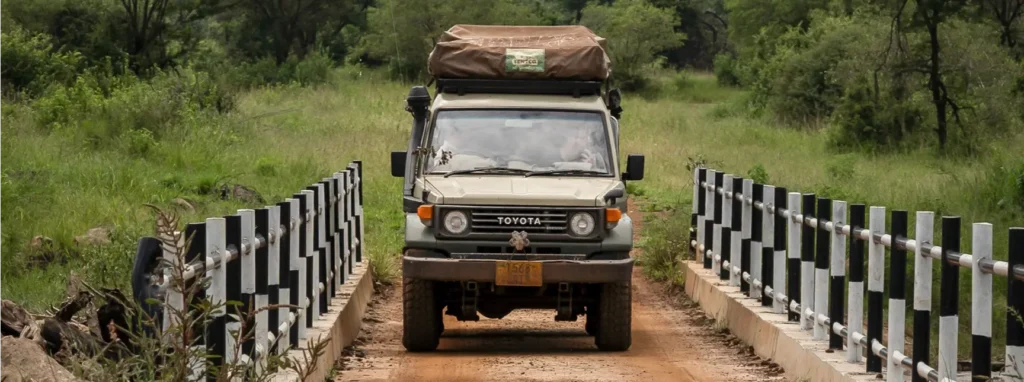
Driving in Uganda gives adventure seekers total freedom to discover the Pearl of Africa on their own terms with self-drive Uganda road trips. You set the pace, pulling over anytime gorillas pop up or stunning views catch your eye. This kind of independent Uganda travel unlocks real, personal moments you just can’t get on standard guided tours.
Uganda welcomes self-drive tourists with improving road infrastructure and accessible national parks. The country hosts mountain gorillas, tree-climbing lions, and diverse wildlife across stunning landscapes. Most tourists find driving in Uganda manageable with proper preparation and suitable vehicles.
Self-drive safaris cost significantly less than fully guided packages. You eliminate guide fees, company profits, and fixed schedules. Budget-conscious travelers save a lot while maintaining quality wildlife encounters.
Safari Masters has facilitated self-drive adventures throughout East Africa for over 14 years. Our clients successfully navigate Uganda’s roads with proper vehicles and comprehensive support. This guide shares essential knowledge from years of operational experience.
Uganda Driving Rules for Tourists
Understanding legal requirements prevents complications at police checkpoints and rental counters. Uganda enforces specific regulations for foreign drivers. Proper documentation remains essential throughout your journey.
Do You Need an International Driving Permit (IDP) in Uganda?
Bring your valid home driving license. You also need an International Driving Permit (IDP). Check here for details. Always carry your original license.
The IDP works with your home license, it doesn’t replace it. Get it from your country’s car club before you leave. Uganda only accepts IDPs from the 1949 Geneva Convention.
It takes 2-4 weeks to process. Costs about $20-30. Good for one year from the date they give it to you.
Required Documents:
- Valid passport (original)
- Home country driving license (original)
- International Driving Permit (IDP)
- Vehicle registration certificate
- Vehicle insurance papers (supplied with the car)
- Rental agreement (if applicable)
Uganda has police checkpoints all over, and they check your papers a lot. No docs? You will get fines or they take your car. Keep everything in waterproof folders right by your driver’s seat for quick access.
Minimum Age and Driving Experience for Car Rental in Uganda
Uganda lets locals and residents drive from age 18. But rental companies for tourists set higher limits. At Safari Masters, drivers must be at least 23 years old.
A new license is fine, there is no minimum driving experience. Uganda’s tough mountain roads, bumpy tracks and heavy traffic need real skill.
Be honest about your skills before booking. Safari Masters offers driver guides for $30 a day if you want help.
Uganda Speed Limits (Towns, Highways and National Parks)
Speed limits in Uganda change by road and spot. Know them to skip fines and stay safe. Cops check speeds by hand or with cameras.
Speed Limits:
| Area | Speed Limit |
|---|---|
| Urban areas and towns | 50 km/h max |
| Rural roads | 80 km/h max |
| Highways | 100 km/h max |
| National parks | 30-40 km/h (strict) |
| School zones | 30 km/h (school hours) |
Speed cameras are operational in Kampala and other major uganda cities. Police conduct manual checks using radar guns on highways. Fines range from 50,000 to 200,000 Ugandan shillings ($15-60 USD) depending on violation severity.
Traffic Laws in Uganda: Seatbelts, Mobile Phones and Alcohol Limits
Uganda enforces traffic regulations protecting road users and pedestrians. Breaking traffic rules in Uganda can land you with instant fines or even arrest. Know the laws upfront to dodge big legal headaches.
Seatbelt Requirements: All vehicle occupants must wear seatbelts at all times. Front and rear passengers face this mandatory requirement. Police check compliance at checkpoints regularly. Fines of 20,000-50,000 shillings ($6-15 USD) apply for violations.
No using phones by hand while driving in Uganda, it is illegal everywhere. Hands-free is your only way to talk. Texting? Big fines. Cops check for this at stops. Stash your phone away and pull over fully to call or check messages.
Alcohol Limits: Uganda maintains a blood alcohol limit of 0.08% for drivers. However, zero tolerance applies during serious accidents.
Uganda Police Checkpoints – What Tourists Should Know
Police checkpoints pop up often on Uganda’s main roads for security and traffic checks. Knowing how to handle them cuts down on stress.
Pull over fully when cops wave you down. Stay calm and polite, no matter what. Hand over docs like license, IDP, insurance, and registration when asked—no arguing.
Keep papers neat and easy to grab: license, IDP, insurance, vehicle rego, and tourist visa. Missing documents can lead to fines.
You need to carry a small amount of local currency. However, only pay official fines with proper receipts. Safari Masters provides 24/7 support if checkpoint situations become problematic.
Driving in Uganda Road Conditions: What to Expect
Uganda roads range from smooth highways to rough dirt tracks with big quality gaps. Knowing these differences helps you pick smart routes and realistic travel times. It also affects what vehicle you need and how long trips take.
Are Roads in Uganda Paved or Dirt?
Uganda’s roads divide into paved highways and rough murram (laterite) tracks. Major connections between cities feature decent tarmac. However, rural areas and national park approaches require high-clearance 4×4 vehicles.
Approximately 30% of Uganda’s road network features pavement. The remaining 70% consists of murram, gravel, or dirt tracks. Road quality varies dramatically depending on location and maintenance schedules.
Paved Road Conditions: Even paved routes develop potholes after heavy rains. Some sections deteriorate severely requiring constant vigilance. Speed must decrease significantly through damaged areas.
Kampala-Entebbe Highway Conditions
The Kampala-Entebbe Expressway represents Uganda’s best road infrastructure. This modern toll highway connects the capital with Entebbe International Airport. The 51-kilometer route features excellent pavement throughout.
Highway Features:
- Modern four-lane divided highway
- Toll charges apply (check current UNRA rates before you travel)
- Well-maintained pavement
- Clear signage and road markings
- Travel time approximately 45 minutes
Alternative routes avoid tolls but increase journey times significantly. Heavy traffic congestion affects non-highway options during peak hours. The expressway justifies toll costs through time savings.
Rural and National Park Roads (Murram, Gravel and Mud)
Rural Uganda relies heavily on murram roads constructed from compacted laterite soil. These surfaces handle reasonably well during dry seasons. However, heavy rains transform them into muddy, slippery challenges.
Murram Road Characteristics:
- Compacted red laterite soil surface
- Corrugations develop from traffic patterns
- Dust clouds reduce visibility significantly
- Slippery when wet
- 4×4 capability essential
National park approaches almost universally feature murram construction. Queen Elizabeth, Murchison Falls, and Kidepo access roads remain unpaved. High ground clearance and four-wheel-drive prove necessary.
Gravel roads offer slightly better surfaces than pure murram. However, loose stones create handling challenges. Sharp rocks puncture tires occasionally despite reinforced construction.
Bwindi Self Drive Roads – Steep, Winding and Mountainous Routes
Bwindi Impenetrable National Park sits in southwestern Uganda’s mountainous terrain. Roads approaching this gorilla trekking destination rank among Uganda’s most challenging. Steep gradients, sharp switchbacks, and narrow sections test even confident drivers.
Bwindi Route Challenges:
- Grades exceeding 15% in places
- Hairpin turns with limited visibility
- Single-lane sections requiring careful passing
- No guardrails on cliff edges
- Altitude changes affecting engine performance
The journey from Kabale to Buhoma sector, via Ruhija, covers approximately 90 kilometers. However, travel time reaches 3-4 hours due to road conditions. Experienced mountain drivers handle these routes successfully.
Different Bwindi sectors require varying approach difficulties. Buhoma sector offers the best road access. Ruhija and Rushaga sectors involve steeper, rougher approaches. Research your specific sector requirements before departure.
Northern Uganda and Kidepo Valley Road Conditions
Northern Uganda features the country’s most remote and challenging driving conditions. Kidepo Valley National Park sits near the South Sudan border requiring serious expedition planning. The journey from Kampala covers about 590 kilometers, so most drivers split it over two days.
Northern Route Challenges:
- Long distances between services
- Limited fuel availability
- Rough murram throughout
- River crossings during rains
- Minimal mobile phone coverage
Roads improve gradually as tourism infrastructure develops. However, northern routes still demand self-sufficiency and preparation. Carry extra fuel, water, and emergency supplies.
Kidepo rewards adventurous travelers with pristine wilderness and rare wildlife species. The drive is long, so check road conditions before you go. To save time, you can also fly to Kidepo.
Driving During Uganda Rainy Season
Rains in Uganda hit roads hard twice a year, turning dirt tracks into mud pits and even flooding highways. Smart self-drivers plan around them to stay safe and on track.
Long Rains (March-May): These bring the worst downpours, heavy floods and deep mud make back roads tough or impossible without a solid 4×4. Remote spots might close off completely, river crossings get dicey, and mountain paths to Bwindi turn scary. Add extra time and map backups.
Short Rains (Oct-Nov): Shorter afternoon storms here, roads dry fast, but overnight rain leaves morning mud on gravel (murram) surfaces. Not as bad, but still watch it.
Best Dry Seasons: Go December-February or June-September for firm roads, easy river spots, and prime self-drive conditions. Perfect for gorilla treks and safaris without the slop.
Quick Tip: Check weather apps and local updates before hitting the road, rains shift, but sticking to dry windows saves headaches.
Is Self Drive in Uganda Safe for Tourists?
Yes, self-drive remains safe throughout Uganda with proper preparation and awareness. Many tourists complete independent safaris every year without serious incidents. However, specific precautions enhance safety significantly.
Is Driving in Uganda Safe for First-Time Visitors?
Uganda presents manageable challenges for confident international drivers. Road conditions and traffic patterns differ from Western norms significantly. However, adaptation happens quickly with patience and caution.
Safety Considerations:
- Road quality varies dramatically
- Traffic follows less predictable patterns
- Livestock and pedestrians appear unexpectedly
- Mechanical breakdowns occur more frequently
- Medical facilities remain limited in rural areas
First-time Africa visitors should assess their comfort level honestly. Those nervous about challenging conditions benefit from hiring driver guides. Safari Masters offers professional drivers at just $30 daily.
Previous international driving experience helps significantly. Drivers comfortable navigating developing countries adapt successfully. However, those accustomed only to developed infrastructure may struggle initially.
Why You Should Avoid Night Driving in Uganda
Night driving presents serious safety challenges throughout Uganda. Poor road lighting and unmarked hazards create dangerous conditions. Plan daily routes reaching destinations before dark.
Night Driving Hazards:
- Unlit vehicles and pedestrians
- Animals crossing roads
- Potholes invisible in darkness
- Reduced emergency service availability
- Increased crime risk in remote areas
- Boda boda (motorcycle taxi) accidents
Most lodges and campsites close gates at sunset. Arriving after dark may result in denied entry. Plan conservative travel times ensuring daylight arrivals.
Emergency travel only justifies night driving in Uganda. If unavoidable, reduce speeds dramatically below daytime levels. Maintain extreme vigilance for all potential hazards.
Road Safety Risks: Boda Bodas, Livestock and Overtaking
Uganda’s roads present unique hazards requiring constant awareness. Understanding these challenges helps prevent accidents and problems. Defensive driving proves essential throughout your journey.
Boda Boda Dangers: Motorcycle taxis (boda bodas) create significant accident risks in Uganda. These drivers often operate recklessly without proper training. They weave through traffic unpredictably at high speeds.
Maintain generous following distances from boda bodas. Expect sudden stops or direction changes without signals. These accidents cause numerous injuries and fatalities annually.
Livestock Crossings: Cattle, goats, and chickens wander onto roads frequently throughout rural Uganda. Animals cross without warning day or night. Hitting livestock creates liability regardless of circumstances.
Reduce speeds in agricultural areas. Watch for herders moving animals along roadsides. Horn warnings sometimes help but animals react unpredictably.
Dangerous Overtaking: Ugandan drivers overtake aggressively on blind corners and hills. Oncoming vehicles appear suddenly during these maneuvers. Never assume clear roads when others begin overtaking.
Drive defensively assuming risky behaviors from other drivers. Avoid overtaking unless visibility extends well beyond required distances. Flash headlights to warn oncoming traffic of your presence.
Crime and Vehicle Security for Self Drive Travelers
Vehicle security requires attention in Uganda like any developing country. However, violent crime against tourists remains relatively rare. Simple precautions protect against opportunistic theft effectively.
Security Measures:
- Lock vehicles always when parked
- Remove valuables from view
- Park in guarded lots when available
- Never leave belongings on seats
- Keep windows closed in congested areas
- Avoid isolated areas especially at night
Kampala experiences more theft than rural areas. However, national parks and tourist regions remain generally safe. Use common sense and maintain awareness constantly.
Tourist vehicles attract attention inevitably. However, most interactions remain friendly and harmless. Trust your instincts when situations feel uncomfortable.
Emergency Contacts and Breakdown Support
Safari Masters provides 24/7 roadside assistance throughout Uganda. Our emergency response team arranges repairs or replacement vehicles. Contact us immediately when problems occur.
Essential Emergency Numbers:
- Police emergency: 999 or 112
- Ambulance: 999 or 112
- Fire: 999
- Uganda Wildlife Authority: +256 414 355 000
- Call our 24/7 emergency lines: +255 672 467 367 or +255 753 181 516.
Mobile coverage exists on main highways but disappears in parks and remote areas.
Best 4×4 for Uganda Self Drive Safari
Vehicle selection determines safari success in Uganda. Challenging terrain demands high-clearance 4×4 capability. Understanding vehicle options helps secure appropriate transportation.
Why a 4×4 is Essential for Uganda Self Drive Safaris
Standard sedans cannot access Uganda’s national parks safely. Rough roads, river crossings, and steep mountain tracks require serious off-road capability. High ground clearance protects undercarriages from damage.
4×4 Necessity Factors:
- National park roads remain unpaved
- River crossings occur regularly
- Mountain gradients exceed sedan capabilities
- Muddy conditions during rainy seasons
- Ground clearance prevents damage
- Four-wheel-drive handles slippery surfaces
Safari Masters provides well-maintained 4×4 vehicles from $190 daily. Our Land Cruisers come with unlimited mileage, and comprehensive insurance adds $15 per day. Each undergoes thorough mechanical inspection before rentals.
Best Vehicles for Uganda Self Drive
Several 4×4 models perform excellently on Uganda’s challenging roads. Vehicle choice depends on group size, budget, and comfort preferences. These proven options handle safari conditions reliably.
Toyota Land Cruiser: The gold standard for African safaris delivers unmatched reliability. High ground clearance handles rough terrain effortlessly. Spacious interiors accommodate 4-6 passengers comfortably.
Land Cruisers feature robust construction withstanding harsh conditions. Spare parts availability throughout Uganda ensures quick repairs. Safari Masters specializes in Land Cruiser rentals for these reasons.
Toyota Prado: Slightly smaller than Land Cruisers but equally capable. These vehicles suit 2-4 person groups well. Fuel efficiency improves marginally over full-size Land Cruisers.
Modern features include comfortable seating and good visibility. Ground clearance meets all national park requirements. Reliability matches Land Cruiser standards consistently.
Toyota RAV4: Compact SUVs handle most Uganda roads adequately during dry seasons. However, ground clearance limitations restrict rainy season capabilities. These suit budget-conscious travelers on main routes.
RAV4s cannot access some remote areas during wet months. They work well for Kampala-Jinja-Murchison circuits. However, Bwindi and Kidepo require full-size 4x4s.
Hilux Double Cabin: Pickup trucks offer excellent ground clearance and 4×4 capability. Open beds accommodate camping gear easily. However, cab space limits passenger capacity.
These work well for camping-focused safaris. Rooftop tents mount securely on reinforced bars. Two people travel comfortably with gear stored in the bed.
Manual vs Automatic for Uganda’s Hilly Terrain
Manual transmissions suit Uganda’s mountainous terrain better than automatics. Steep Bwindi approaches require engine braking and precise gear control. Manual boxes provide superior hill management.
Manual Transmission Advantages:
- Better control on steep grades
- Engine braking on descents
- Lower rental costs
- Easier repairs if problems occur
- More available in Uganda market
Automatic Transmission Benefits:
- Easier in Kampala traffic
- Less tiring on long journeys
- Better for inexperienced drivers
- Smoother power delivery
Experienced manual drivers should choose this option for Uganda. However, those unfamiliar with manual operation should stick with automatics. Learning manual transmission during safaris creates unnecessary stress.
Rooftop Tent vs Lodge-Based Self Drive
Accommodation choice significantly impacts safari budgets and experiences. Rooftop tent camping provides authenticity and savings. Lodge stays offer comfort and convenience.
Rooftop Tent Advantages:
- Significant cost savings ($25 vs $150+ nightly)
- Camping inside national parks
- Authentic bush experiences
- Quick setup (5-10 minutes)
- Elevated safety from wildlife
Lodge Advantages:
- Hot showers and electricity
- Restaurant meals included
- No setup effort required
- More comfortable for families
- Better facilities overall
Camping gear is optional, from $25 daily. This includes rooftop or ground tents, sleeping bags, and cooking gear. Budget travelers save hundreds of dollars choosing camping.
Uganda 4×4 Rental Costs (Daily Rates and Budget Planning)
Understanding rental costs helps plan realistic budgets. Prices vary based on vehicle type, season, and rental duration. Safari Masters provides transparent pricing without hidden fees.
Safari Masters 4×4 Rental Rates:
- Toyota Land Cruiser: from $190 per day
- Comprehensive insurance: $15 per day
- Camping equipment (optional): from $25 per day
- GPS navigation unit: $8 per day
- Professional driver guide: $30 per day (optional)
These rates include unlimited mileage and 24/7 roadside assistance. Fuel costs approximately $1.20-1.50 per liter throughout Uganda. Budget $50-80 daily for fuel on safari routes.
Budget Planning Tips: Groups who share one vehicle split the car, camping gear and fuel costs. This makes self-drive extremely affordable compared to guided tours. Ask us about a discount for rentals of 20 days or more.
Driving Tips for Kampala Traffic and Urban Areas
Kampala traffic presents unique challenges requiring specific strategies. Understanding urban driving techniques prevents accidents and reduces stress. These proven tactics help navigate safely.
How to Drive in Kampala Traffic Safely
Kampala ranks among Africa’s most congested cities with chaotic traffic patterns. Patience and defensive driving prove essential for safe navigation. Expect heavy congestion during morning (7-9am) and evening (5-7pm) rush hours.
Kampala Traffic Strategies:
- Allow double normal travel time during rush hours
- Maintain generous following distances
- Expect sudden stops without warning
- Watch for boda bodas weaving through traffic
- Use mirrors constantly
- Stay calm despite frustrating delays
Traffic lights work intermittently in Kampala. Treat non-functioning signals as four-way stops. Police direct traffic at major intersections during peak hours. Follow officer instructions immediately.
Defensive Driving Strategies in Uganda
Defensive driving prevents accidents throughout Uganda. Assume other drivers may not follow rules or drive predictably. This mindset keeps you prepared for unexpected situations.
Key Defensive Techniques:
- Scan far ahead for potential hazards
- Maintain escape routes around your vehicle
- Anticipate mistakes from other drivers
- Never assume right-of-way will be respected
- Reduce speeds in congested areas
- Make eye contact with other drivers when possible
Expect pedestrians, cyclists, and animals on all roads. They appear suddenly without warning. Constant vigilance prevents most accidents effectively.
Navigating Roundabouts and Unmarked Speed Bumps
Roundabouts (traffic circles) appear frequently throughout Uganda. These require yielding to traffic already circulating. However, enforcement remains inconsistent creating confusion.
Roundabout Rules:
- Yield to vehicles already in the circle
- Signal before exiting
- Watch for vehicles entering without yielding
- Multiple lanes require extra caution
- Expect unpredictable behavior
Speed bumps (sleeping policemen) appear frequently without warning signs. Some remain unmarked and poorly visible. Excessive speed over these damages vehicles and causes loss of control.
Reduce speeds approaching populated areas. Watch for bump shapes in road surfaces. Local drivers often know locations and slow automatically.
Fuel Stations, Payments and Refueling Tips
Fuel is easier to find in Uganda than in many African countries. Major towns feature multiple stations from Shell, Total, and local brands. However, rural areas offer limited options.
Refueling Strategies:
- Fill tanks before entering national parks
- Carry extra fuel in approved containers for remote areas
- Fuel quality remains generally good from major brands
- Prices range $1.20-1.50 per liter
- Credit cards work at major stations
- Carry cash for rural stations
Attendants pump fuel at all stations. Tipping 1,000-2,000 shillings ($0.30-0.60) remains customary. Verify fuel amounts match requested quantities before paying.
Diesel availability exceeds petrol in rural regions. Specify fuel type clearly to prevent filling errors. Wrong fuel requires expensive tank drainage.
Bwindi Self Drive Gorilla Trek Guide
Mountain gorilla trekking represents Uganda’s premier wildlife attraction. Driving to Bwindi independently requires planning and preparation. This section covers essential information for self-drive gorilla visitors.
How to Reach Bwindi Impenetrable National Park by Car
Multiple routes access Bwindi depending on your starting location. The most common approach originates from Kampala or Entebbe. Journey duration ranges 9-11 hours covering approximately 495 kilometers.
Kampala to Bwindi Route:
- Kampala to Masaka: 130 km (2 hours)
- Masaka to Mbarara: 140 km (2.5 hours)
- Mbarara to Kabale: 135 km (2.5 hours)
- Kabale to Bwindi (Buhoma, via Ruhija): 90 km (3-4 hours)
Most travelers split this journey over two days. We recommend an overnight stop in Mbarara or Kabale, as speeds are often 30 to 50 km/h. This prevents exhausting single-day drives before gorilla treks.
Alternative routes from Rwanda reduce driving significantly. Kigali to Bwindi covers just 4-5 hours. However, border crossing requirements apply.
Road Conditions to Different Bwindi Sectors
Bwindi contains four gorilla trekking sectors: Buhoma, Ruhija, Rushaga, and Nkuringo. Each sector requires different approach routes and effort levels. Road quality varies significantly between sectors.
Buhoma Sector (North): This sector offers the best road access to Bwindi. The final 15 kilometers from the main road feature decent murram. Gradient remains moderate compared to other sectors.
Ruhija Sector (East): Steep ascents characterize the Ruhija approach. Narrow roads with sharp turns test driver skills. However, pavement extends closer than other sectors.
Rushaga Sector (South): The southernmost sector requires navigating challenging mountain roads. Steep gradients and rough surfaces demand 4×4 capability. However, this sector offers good gorilla group availability.
Nkuringo Sector (South): Perhaps the most challenging approach involves narrow tracks clinging to mountainsides. Experienced drivers handle these routes successfully. However, less confident drivers may find this stressful.
Gorilla Permit Booking and Advance Planning
Gorilla permits must be booked months in advance through Uganda Wildlife Authority. Permits cost $800 per person for foreign non-residents, or $600 in the low-season months of April, May and November. Limited daily availability makes advance booking essential.
Book permits 4-6 months ahead during peak season (June-September, December-February). Sectors and trekking dates must be specified during booking. Refunds are limited, so check UWA’s cancellation terms before you book.
Coordinate permit bookings with vehicle rental and accommodation. Trekking starts at 8am requiring overnight stays near your sector. Plan arrival the day before trekking dates.
Safari Masters assists with permit bookings and complete trip coordination. We ensure vehicle, accommodation, and permits align perfectly. This eliminates stressful planning complications.
Uganda Driving FAQs
Can I Drive in Uganda at Night?
No, you should avoid driving in Uganda at night whenever possible. Poor road lighting, unlit vehicles, pedestrians, and animals create serious hazards after dark. Most lodges close gates at sunset. Plan routes reaching destinations before dark. Emergency travel only justifies night driving.
Do I Need an IDP for Uganda?
Yes. Bring your valid home driving license. Carry your IDP with your license. Apply through automobile associations before departure. IDPs remain valid one year from issue date.
What Are the Speed Limits in Uganda?
Speed limits vary by location: 50 km/h in towns, 80 km/h on rural roads, 100 km/h on highways, and 30-40 km/h in national parks. Police enforce limits using speed cameras in cities and radar guns on highways. Fines range $15-60 USD depending on violation severity.
Are Roads to Bwindi Safe for Self Drive?
Yes, roads to Bwindi are safe for confident drivers with 4×4 vehicles. Routes feature steep gradients, sharp turns, and narrow sections requiring careful driving. Buhoma sector offers the easiest access. Experienced mountain drivers navigate successfully. However, less confident drivers should consider driver guides at $30 daily.
How Much Does a Uganda Self Drive Safari Cost?
For two people sharing one car, budget about $175-200 per person daily. This includes vehicle rental (from $190/day), camping gear (from $25/day), optional insurance ($15/day), park entry ($35-45 per person), and fuel ($50-80/day). Four people sharing pay roughly $105-125 each daily. Gorilla permits add $800 per person separately ($600 in April, May and November).
Are Police Stops Common in Uganda?
Yes, police checkpoints appear regularly on major routes throughout Uganda. These serve security and traffic enforcement purposes. Stop completely when signaled. Present all required documents politely. Legitimate checks happen frequently. Resist bribery requests politely but firmly. Request written citations for violations.
Is Uganda Safer Than Kenya for Self Drive?
Both countries offer safe self-drive opportunities with proper preparation. Uganda features less tourism infrastructure but lower crime rates in rural areas. Kenya offers more developed safari circuits and better road signage. Both require similar precautions regarding road safety and vehicle security. Choose based on wildlife interests rather than safety concerns alone.
At What Side of the Road Should I Drive?
Drive on the left side of roads throughout Uganda. The country follows left-hand traffic inherited from British colonial influence. Steering wheels sit on the right side of vehicles. American and European drivers require adjustment time. Practice in quiet areas before tackling busy roads. The adaptation becomes natural after several days.
Ready for Your Uganda Self-Drive Adventure?
Driving in Uganda delivers authentic safari experiences at reasonable costs. You control schedules while enjoying complete independence. Proper preparation ensures safe, comfortable journeys throughout this remarkable country.
Safari Masters specializes in facilitating self-drive safaris throughout East Africa. Our 14 years of operations inform comprehensive pre-departure briefings. We ensure clients understand requirements before arriving in Uganda.
Our fully equipped 4×4 vehicles meet all requirements for Uganda’s challenging terrain. Toyota Land Cruisers rent from $190 daily with unlimited mileage, and comprehensive insurance adds $15 per day. Camping equipment costs from just $25 daily for budget-conscious adventurers.
We provide 24/7 roadside assistance throughout Uganda. Real-time support helps navigate unexpected situations confidently. Our local knowledge enhances independent safaris significantly.
Safari Masters Service Summary:
- 4×4 Land Cruiser rental: from $190/day
- Comprehensive insurance: $15/day
- Camping equipment (optional): from $25/day
- GPS navigation: $8/day
- Professional driver guide: $30/day (optional)
- 24/7 emergency support: Included
Ready to explore Uganda independently? Contact Safari Masters today for personalized safari planning. We provide everything needed for successful self-drive adventures. Your Pearl of Africa journey awaits with proper preparation and expert support.