


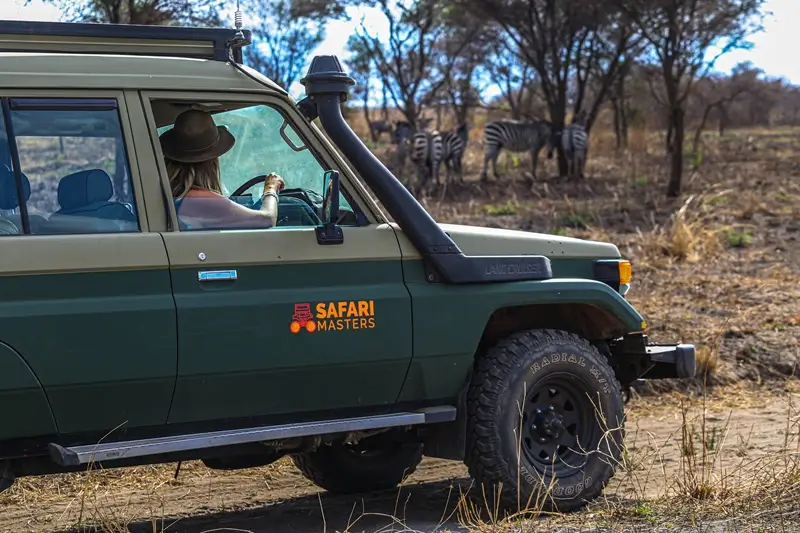
Self drive Masai Mara safaris transform passive tourists into active explorers. You navigate the reserve yourself, find wildlife independently, and create your own authentic safari story. Safari Masters has facilitated self-drive adventures throughout Kenya for over 14 years, and the Masai Mara remains our clients’ most requested destination.
This comprehensive guide covers everything you need: current 2026 regulations, complete cost breakdowns, vehicle requirements, entry gate strategies, proven wildlife routes, safety considerations, and step-by-step itineraries. We share real experience from hundreds of successful self drive Masai Mara safaris to help you plan confidently.
What Is a Self Drive Safari in Masai Mara?
A self drive Masai Mara safari means renting a 4×4 vehicle and exploring Kenya’s premier wildlife reserve independently without professional guides or drivers. You handle all navigation, wildlife spotting, and schedule management yourself while experiencing complete freedom within park regulations.
How Self-Drive Differs from Guided Safaris
Traditional guided safaris place you in the back seat with a professional driver-guide who navigates, spots animals, and educates throughout. You benefit from their expertise but follow their schedule and share the vehicle with other tourists often.
Self-drive safaris put you behind the wheel making every decision. Want to watch that cheetah for three hours? Your choice. Prefer sunrise drives starting at 6:00 AM rather than 7:30 AM group departures? Do it. This independence creates deeply personal experiences impossible on scheduled tours.
However, you sacrifice guide expertise. Professional guides notice subtle wildlife signs you might miss. They know where specific animals were spotted recently. Their knowledge adds educational depth. Self-drivers must develop these skills themselves or accept missing some sightings.
Who Should Do Self Drive Masai Mara
Self-drive suits specific traveler types perfectly:
Experienced safari-goers who understand wildlife behavior and feel confident navigating unfamiliar terrain. If you have completed guided safaris before and crave more independence, self-drive delivers.
Photography enthusiasts needing unlimited time at sightings. Wildlife photographers cannot work effectively when guides move on after 10-15 minutes. Self-drive allows waiting hours for perfect light and behavior.
Budget-conscious travelers willing to handle logistics for substantial savings. Self-drive costs typically run 40-50% less than comparable guided safaris.
Adventurous couples or small groups who enjoy navigation challenges and problem-solving together. The shared adventure strengthens bonds.
Who Should NOT Self-Drive
First-time Africa visitors with zero safari experience face overwhelming challenges. Combining unfamiliar wildlife, terrain, navigation, and vehicle management simultaneously creates stress rather than enjoyment. Consider guided safaris first to understand the environment.
People extremely anxious about navigation or mechanical issues will not relax enough to enjoy independence. The constant worry defeats the purpose.
Travelers wanting guaranteed sightings and maximum wildlife knowledge benefit more from professional guides. Guides dramatically increase spotting success and provide context that enhances appreciation.
Real Expectations: Terrain, Wildlife, and Navigation
Masai Mara roads range from well-graded main routes to rough tracks requiring careful 4×4 driving. During rainy seasons (April-May, November), some areas become challenging even for experienced drivers. Black cotton soil turns impossibly slippery when wet.
Wildlife encounters happen constantly but you must actively search rather than passively waiting. Successful self-drivers scan landscapes continuously, watch for circling vultures, and position vehicles strategically near water sources and prey concentrations.
Navigation requires offline maps, GPS awareness, and landmark recognition. Google Maps fails inside the reserve. You rely on Maps.me, physical maps, and asking rangers or other tourists for directions.
Safari Masters provides comprehensive pre-departure briefings for our self-drive Kenya clients. Our 14 years facilitating independent safaris throughout Kenya means we understand exactly what preparation ensures success versus what creates problems.
Is Self Drive Masai Mara Allowed in 2026? (Updated Rules)
Yes, self-drive safaris remain fully allowed in Masai Mara National Reserve in 2026. Kenya Wildlife Service and Masai Mara reserve authorities welcome independent visitors in properly equipped vehicles. No requirement exists for professional guides or rangers to accompany you.
Current Legal Status and 2024-2026 Rule Updates
Masai Mara operates under regulations established by the Narok County Government (for the main reserve) and the Mara Conservancy (for the Mara Triangle). Both sectors permit self-drive access with identical vehicle requirements.
Recent 2024-2026 updates include:
- Stricter enforcement of 4×4-only rules (2WD vehicles denied entry)
- Enhanced gate security verifying proper insurance documentation
- Increased fines for off-road driving violations ($500-1000)
- Digital payment options at most gates alongside cash acceptance
No significant restrictions have been added. Self-drive access continues as it has for decades.
Mandatory 4×4 Vehicle Requirement
All vehicles entering Masai Mara must have functional four-wheel drive capability. Rangers at gates verify this before granting entry. Standard SUVs with all-wheel drive but no low-range gearing face rejection.
High ground clearance (minimum 20cm) proves equally essential. Roads deteriorate during rains and even dry season tracks have deep ruts from heavy safari traffic.
Safari Masters’ rental fleet consists exclusively of proper 4×4 Land Cruisers and similar vehicles meeting all Masai Mara requirements. We never rent vehicles that might face gate denial.
Entry Permits and Documentation
You need these documents at entry gates:
- Valid passport or national ID
- Vehicle registration certificate
- Comprehensive insurance certificate
- International Driving Permit (if your license lacks English)
- Payment confirmation or cash for fees
Park entry permits are purchased at gates or pre-booked online through Kenya Wildlife Service systems. Pre-booking saves time during high season but most self-drivers simply pay cash at gates.
Self Drive Masai Mara Costs Breakdown (2026 Updated)
Understanding complete costs prevents budget surprises. Masai Mara represents Kenya’s most expensive park, but wildlife density and Great Migration access justify premium pricing for most visitors.
Park Entry Fees (Per Person, Per Day)
Masai Mara National Reserve charges:
- Adults (non-residents): $80 per person per 24-hour period
- Children (3-17 years): $45 per person per 24-hour period
- Children under 3: Free entry
- Vehicle entry: $50-100 depending on vehicle type and size
These fees apply to the main Narok County-managed reserve. The Mara Triangle (western sector) has identical pricing but separate payment systems.
The 24-hour period begins when you enter, not at midnight. Arriving at 2:00 PM means your fee expires at 2:00 PM the following day.
Kenya residents and East African Community citizens pay significantly reduced rates in local currency. However, most international tourists fall into non-resident categories.
Conservation Fee and VAT
An 18% VAT applies to most Masai Mara fees. This typically gets included in quoted prices but verify when budgeting. Some gate quotes exclude VAT, creating confusion.
Vehicle Rental Costs
4×4 safari vehicles cost $170-200 per day typically including:
- Comprehensive insurance
- Unlimited mileage
- Camping equipment (if requested)
- Roof hatch for wildlife viewing
- GPS navigation device
Safari Masters provides fully equipped Land Cruisers at $170 daily. This includes everything needed for Masai Mara access: high clearance, low-range 4WD, spare tires, recovery equipment, and comprehensive insurance.
Fuel Costs
Budget approximately $50-70 per day for fuel depending on driving amount. Masai Mara game drives cover 80-150 kilometers daily. Land Cruisers consume 15-20 liters per 100 km at safari speeds.
Fill up completely in Narok town before entering the reserve. Fuel stations inside or immediately adjacent to Masai Mara do not exist.
Accommodation Costs
Options range dramatically:
- Public campsites: $30-40 per person per night (basic facilities, shared, unfenced)
- Private campsites: $50-80 per person per night (exclusive use, minimal facilities)
- Budget lodges: $80-150 per person per night
- Mid-range lodges: $150-300 per person per night
- Luxury camps: $300-800+ per person per night
Self-drive camping creates the biggest savings. Safari Masters provides complete camping equipment including rooftop tents, cooking gear, and camp furniture for $20 daily.
Total 2-3 Day Trip Budget Examples
Budget Self-Drive (2 people, 3 days/2 nights):
- Park entry: 2 × $80 × 3 = $480
- Vehicle fees: $50 × 3 = $150
- Vehicle rental: $170 × 3 = $510
- Camping: 2 × $35 × 2 = $140
- Fuel: $60 × 3 = $180
- Food: 2 × $25 × 3 = $150
- Total: $1,610 ($805 per person)
Mid-Range Self-Drive with Lodges (2 people, 3 days/2 nights):
- Park entry: $480
- Vehicle fees: $150
- Vehicle rental: $510
- Lodge accommodation: 2 × $200 × 2 = $800
- Fuel: $180
- Meals at lodges: 2 × $40 × 3 = $240
- Total: $2,360 ($1,180 per person)
These budgets exclude getting to/from Nairobi. Add approximately $30 fuel each way (Nairobi to Masai Mara is 275km, 5-6 hours).
Compared to guided safari costs of $200-400 per person per day minimum, self-drive delivers substantial savings while maintaining wildlife access.
Best 4×4 Vehicles for Self Drive Masai Mara
Why 4WD Is Absolutely Essential
Masai Mara’s terrain demands proper four-wheel drive capability. The reserve covers 1,510 square kilometers of grassland, woodland, and hills. Roads vary from maintained gravel to barely-visible tracks through tall grass.
During rainy seasons, black cotton soil areas become impassable quagmires even for the best 4x4s. Without low-range gearing and high clearance, you will get hopelessly stuck or denied entry entirely.
Even during dry seasons, deep ruts, sandy patches, and river crossings require 4WD capability. Standard sedans and AWD crossovers cannot handle these conditions safely.
Recommended Vehicle Types
Toyota Land Cruiser represents the gold standard for Masai Mara safaris. These legendary vehicles handle rough terrain reliably while offering excellent visibility through roof hatches. Safari Masters maintains Land Cruisers specifically because they perform best in actual Mara conditions.
Toyota Prado suits smaller groups preferring slightly more compact vehicles. These provide adequate capability while being easier to maneuver on tight tracks.
Land Rover Defender (older models) work well but require more mechanical sympathy. These British classics offer excellent off-road performance but parts availability can be problematic.
Toyota Hilux double-cab pickups handle Masai Mara well when equipped with rooftop tents. These suit adventurous couples comfortable with more exposure to elements.
Essential Vehicle Features
Your Masai Mara vehicle must have:
High ground clearance (20cm minimum): Protects undercarriage from rocks and deep ruts. Anything lower risks damage or getting stuck.
Functional low-range 4WD: Essential for mud, sand, and steep inclines. Test this before departing Nairobi.
Roof hatch or pop-up roof: Wildlife viewing and photography require standing height. Side window viewing proves inadequate.
Two spare tires: Masai Mara’s rocky tracks and acacia thorns cause punctures regularly. One spare is insufficient for multi-day trips.
Long-range fuel tank or jerry cans: No fuel stations exist in or near the reserve. Carrying 150+ kilometer range proves critical.
Recovery equipment: Tow rope, shovel, traction boards help extract stuck vehicles. Other tourists often assist but you need proper gear.
Common Tourist Mistakes When Choosing Vehicles
Booking standard SUVs thinking “4WD” on the spec sheet suffices. Many crossovers advertise 4WD but lack low-range capability required for serious off-road conditions.
Choosing the cheapest rental without verifying Masai Mara suitability. Some budget operators rent inadequate vehicles that rangers reject at gates, wasting your time and money.
Not testing 4WD function before leaving Nairobi. Discovering broken 4WD systems at Masai Mara gates 300 kilometers from rental offices creates massive problems.
Safari Masters pre-inspects every vehicle before client departures. Our mechanics verify 4WD operation, tire condition, and all essential systems. This diligence prevents most common vehicle-related safari failures.
Masai Mara Entry Gates Guide
Masai Mara has multiple entry gates serving different sectors. Choosing the right gate optimizes your itinerary and affects wildlife access dramatically.
Sekenani Gate (Best for Beginners)
Location and Access: Eastern boundary, closest gate from Nairobi (275km, 5-6 hours). This main entry point handles highest tourist traffic.
Best For: First-time self-drivers wanting well-marked routes and proximity to central Masai Mara areas. The road from Narok town to Sekenani remains paved until the final approach.
Wildlife Access: Direct access to central plains, Keekorok Lodge area, and Talek River circuits. Excellent general game viewing within 30 minutes of entry.
Facilities: Proper gate office, reliable payment systems, rangers available for questions, nearby campsites (20-30 minutes drive).
Road Conditions: Well-graded main tracks from Sekenani toward central reserve. Secondary routes vary but most remain manageable during dry seasons.
Talek Gate (Central Access to Wildlife Zones)
Location and Access: Northern boundary near Talek town. Approximately 290km from Nairobi (6-7 hours via different route than Sekenani).
Best For: Travelers prioritizing proximity to Big Cat territory and Talek River crossings. This gate provides direct access to productive wildlife viewing areas.
Wildlife Access: Immediate access to Talek River system where leopards, lions, and cheetahs concentrate. Migration herds cross through this sector regularly during July-October.
Facilities: Smaller gate with basic services. Payment systems work but expect longer processing than Sekenani during busy periods.
Road Conditions: Variable. Main tracks heading south toward Keekorok are reasonable. Routes toward Mara River can be challenging during rains.
Oloololo Gate (Mara Triangle Access)
Location and Access: Western boundary, the gateway to Mara Triangle (Mara Conservancy-managed sector). Approximately 320km from Nairobi (7-8 hours).
Best For: Experienced self-drivers seeking quieter areas and Mara Triangle’s excellent conservation management. This sector generally has fewer vehicles and well-maintained roads.
Wildlife Access: Outstanding wildlife viewing with lower tourist density. Mara River crossings happen in Triangle sector during peak migration. Excellent year-round resident wildlife.
Facilities: Well-organized gate reflecting Mara Conservancy’s superior management. Efficient payment processing, helpful staff, good signage inside.
Road Conditions: Generally better than main reserve due to Conservancy’s active road maintenance. However, accessing Oloololo from Nairobi takes longer.
Which Gate to Choose Based on Your Itinerary
First-time self-drivers: Sekenani Gate provides easiest access and most straightforward navigation. Well-worn tracks make wildlife finding less challenging.
Migration focus (July-October): Talek or Oloololo gates position you closer to Mara River crossing points. Check recent migration reports before deciding.
Quieter experience: Oloololo and Mara Triangle offer fewer crowds and better-maintained roads at the cost of longer access from Nairobi.
Multiple-day trips: Enter via Sekenani, explore central areas, then drive to Triangle sector exiting via Oloololo (or reverse). This covers maximum diversity.
Navigation Tips for First-Timers
Download offline maps (Maps.me) showing all gates before departure. GPS coordinates for each gate:
- Sekenani: -1.4356, 35.2625
- Talek: -1.3319, 35.2561
- Oloololo: -1.3578, 35.0819
Ask rangers at gates for current road condition updates and recent wildlife sighting areas. They provide valuable local intelligence.
Program your campsite or lodge coordinates before entering. Getting lost while searching for accommodation after dark violates park rules and creates safety issues.
Best Self Drive Routes in Masai Mara (2026 Expert Routes)
These proven routes maximize wildlife encounters while matching different skill levels and interests.
Sekenani to Keekorok Plains Route (Beginner Friendly)
Distance and Duration: 45km, approximately 3-4 hours with wildlife stops
Difficulty: Easy. Well-graded main track suitable for beginners.
Wildlife Highlights: Open plains around Keekorok host vast herbivore herds, making predator sightings likely. Cheetahs hunt here regularly. Lions rest under scattered acacias. The plains also attract hyenas and jackals.
Navigation: Straightforward main track with clear signage near Keekorok Lodge. Difficult to get lost.
Best Time: Morning departures catch predators active after night hunting. Afternoon drives offer excellent light for photography.
Tips: Stop at any vehicle clusters—usually indicate good sightings. Drive slowly scanning both sides. Wildlife often rests in shade during midday heat.
Talek River Wildlife Circuit (Big Cats Zone)
Distance and Duration: 35km circuit, 3-5 hours depending on sightings
Difficulty: Moderate. Some tracks deteriorate during rains.
Wildlife Highlights: Talek River system supports resident lion prides, regular leopard sightings, and cheetah territories. Crocodiles and hippos occupy permanent pools. Elephants visit to drink.
Navigation: Follow the river system north-south. Multiple interconnecting tracks allow circuit options. GPS helpful for side tracks.
Best Time: Early morning and late afternoon when cats become active. Midday offers crocodile and hippo viewing at river pools.
Tips: Watch trees along the river—leopards rest in branches during day. Vultures circling indicate kills, leading to predator action.
Mara River Crossing Route (Migration Season)
Distance and Duration: Variable, 40-60km, 4-8 hours depending on crossing activity
Difficulty: Moderate to challenging. Crowded during peak crossings. Roads deteriorate from heavy traffic.
Wildlife Highlights: July-October brings hundreds of thousands of wildebeest and zebras attempting dangerous Mara River crossings. Crocodiles wait below. Predators patrol banks. This represents Africa’s most spectacular wildlife phenomenon.
Navigation: Multiple crossing points exist. Popular ones get crowded with safari vehicles. Ask rangers at gates for recent crossing locations before heading out.
Best Time: Mornings typically see most crossing activity, though herds cross throughout the day unpredictably. Patience essential—herds may gather for hours before crossing.
Tips: Arrive early to secure good viewing positions. Bring lunch and water—you may wait hours. Respect wildlife by maintaining proper distance. Never approach crossing points too closely.
Oloololo Escarpment Scenic Drive
Distance and Duration: 50km, 3-4 hours with photo stops
Difficulty: Moderate. Some steep sections require careful driving.
Navigation: Follow escarpment edge northward from Oloololo Gate. Tracks parallel the dramatic western boundary.
Wildlife Highlights: Scenic overlooks provide spectacular landscape photography. Resident elephants, buffaloes, and occasionally lions. Less about quantity, more about quality scenery and quieter atmosphere.
Best Time: Late afternoon for dramatic light on escarpment. Morning drives catch elephants before they retreat into thicker vegetation.
Tips: This route rewards photographers and those seeking less crowded experiences rather than maximum wildlife encounters.
3-Day Self-Drive Masai Mara Itinerary (Optimized for Wildlife)
This proven itinerary balances wildlife viewing, driving time, and rest while maximizing your Masai Mara experience.
Day 1: Nairobi to Masai Mara via Sekenani Gate + Evening Drive
6:00 AM: Depart Nairobi after collecting your rental vehicle the previous day. Beat traffic leaving the city.
7:00-9:00 AM: Drive southwest toward Narok town (160km). Stop in Narok for fuel (fill tank completely), last-minute shopping, and breakfast.
9:30 AM-12:00 PM: Continue to Sekenani Gate (115km). Roads deteriorate after Narok but remain manageable. Arrive at gate mid-morning.
12:00-1:00 PM: Complete gate entry formalities. Pay fees, receive permits, get ranger advice on current wildlife locations.
1:00-2:30 PM: Drive to your campsite or lodge (30-60 minutes depending on location). Set up camp if camping. Have lunch.
3:30-6:00 PM: Afternoon game drive exploring areas near Sekenani and toward Keekorok Plains. Focus on getting oriented rather than covering maximum distance. Return to camp before 6:00 PM gate closure time.
Evening: Campfire dinner, review map for Day 2, rest.
Wildlife Strategy Day 1: First afternoon focuses on learning navigation and general area familiarization. Any wildlife encountered is bonus.
Day 2: Full Game Drive (Talek River + Central Plains)
5:30 AM: Wake before sunrise. Quick breakfast (coffee, fruit, cereal).
6:00-10:30 AM: Morning game drive. Head toward Talek River circuits where predators remain active. Drive slowly, scan constantly. Stop at any interesting sightings—you control the schedule.
10:30 AM-12:30 PM: Return to camp for brunch and rest during midday heat. Check vehicle, refuel from jerry cans if needed, plan afternoon route.
3:30-6:00 PM: Afternoon drive exploring different areas. Try central plains or routes toward Mara River (if migration timing suits). Watch sunset from scenic viewpoint before returning to camp.
Evening: Dinner, night sky viewing (Milky Way stunning from Mara), sleep.
Wildlife Strategy Day 2: Full day allows comprehensive exploration. Follow your interests—if you find lions, stay with them. If nothing appears, keep moving.
Day 3: Sunrise Safari + Exit via Sekenani or Oloololo
5:30 AM: Final early game drive. Sunrise is magical and often produces best sightings of entire trip.
6:00-9:00 AM: Last wildlife viewing. Try areas you haven’t explored yet or return to particularly good locations from Day 2.
9:00-10:30 AM: Return to camp. Break camp (if camping) or check out from lodge. Final vehicle check.
10:30 AM-12:00 PM: Exit via Sekenani Gate heading back to Nairobi (or exit via Oloololo if exploring further or continuing to other destinations).
12:00-6:00 PM: Drive back to Nairobi with lunch stop in Narok.
Fuel Planning Throughout:
Start with full tank from Narok. Carry 40 liters in jerry cans. Daily game drives consume 30-40 liters approximately. Top up from jerry cans at camp after Day 1 and Day 2. You should have sufficient fuel to reach Narok on Day 3 where you refuel before Nairobi.
Timing Optimization:
Gates close at 6:00 PM strictly. Always leave extra margin. If you are 30 minutes from camp at 5:30 PM, head back immediately. Getting locked in creates serious problems.
Wildlife viewing peaks early morning (6:00-9:30 AM) and late afternoon (3:30-6:00 PM). Midday drives produce fewer sightings but hippos and crocodiles remain visible at rivers.
Is Self-Drive Masai Mara Safe? (Real Risks Explained)
Yes, self-drive Masai Mara safaris are generally safe when you follow proper precautions and park rules. Thousands of independent travelers explore the reserve annually without serious incidents. However, understanding real risks helps you prepare appropriately.
Wildlife Safety Risks
Lions occasionally approach vehicles closely or rest in shade beneath trees near roads. Never exit your vehicle near lions regardless of how calm they appear. Keep windows mostly closed—just gaps for photography. Curious young males sometimes investigate vehicles.
Elephants demand particular respect, especially breeding herds with calves. Give them wide space. If elephants approach your vehicle, remain calm, turn off engine, sit quietly. Most move past peacefully. However, mock charges happen. Do not panic or run the engine—this often escalates situations.
Buffalo rank among Africa’s most dangerous animals. Solitary males (often ejected from herds) are particularly unpredictable and aggressive. Give them maximum distance. Never approach buffalo on foot under any circumstances.
Hippos leave rivers at night to graze. Morning drives sometimes encounter them returning to water. These territorial animals account for more human deaths in Africa than any other large animal. Never get between hippos and rivers. Give them clear path.
General Wildlife Precautions:
- Stay inside vehicles always except at designated picnic sites
- Keep windows mostly closed with small gaps for cameras
- Never feed or attempt touching any animals
- Maintain minimum 25-meter distances (closer approaches stress wildlife)
- If animals approach you, stay calm and quiet
- Never drive between mothers and young of any species
Road and Weather Challenges
Black cotton soil covers parts of Masai Mara. When dry, it is rock-hard and passable. When wet, it becomes impossibly slippery. Even the best 4x4s get hopelessly stuck. Avoid these areas completely during or immediately after rains.
Deep ruts develop on popular routes from heavy safari vehicle traffic. High clearance prevents grounding. Drive carefully assessing each rut before crossing.
Flash flooding can make river crossings dangerous during rainy seasons. Never attempt crossing fast-flowing water. Water depth can increase dramatically within minutes during storms.
Rough tracks deteriorate vehicles. Check tire pressure, listen for unusual sounds, watch temperature gauges. Breakdowns far from gates become expensive rescue operations.
GPS vs Offline Maps
Google Maps fails inside Masai Mara completely. Download Maps.me covering the entire reserve before entering. Mark your campsite, gate locations, and key landmarks.
Physical paper maps from Kenya Wildlife Service (sold at gates) provide excellent backup. Rangers draw current road conditions and wildlife areas on these for you.
GPS coordinates prove invaluable. Save key locations: gates, camps, lodges, fuel stations in Narok. If you get seriously lost, coordinates help rangers locate you.
Getting Stuck in Mud Scenarios
Despite precautions, getting stuck occasionally happens. If you feel wheels spinning:
- Stop immediately. Continuing just digs deeper.
- Assess situation. How deep? Can you reverse out?
- Deflate tires to 1.5 bar for better traction if mildly stuck.
- Place traction boards under drive wheels.
- Rock vehicle gently back and forth.
- Request help from passing vehicles—safari tourists help each other regularly.
If hopelessly stuck far from help and night approaches, remain with your vehicle. Do not attempt walking anywhere. Contact rangers or Safari Masters emergency line for assistance.
Emergency Preparedness Checklist
Carry these essentials:
- Comprehensive first aid kit
- Extra water (20+ liters)
- Non-perishable emergency food
- Flashlights and extra batteries
- Power banks for phones (fully charged)
- Physical maps and compass
- Satellite phone or local SIM with credit
- Emergency contact numbers (Safari Masters, Kenya Wildlife Service, camp)
- Basic tool kit and tire repair supplies
- Warm clothes for cold mornings and potential overnight
Safari Masters provides 24/7 emergency support for all rental clients. Save our emergency number before entering Masai Mara. We coordinate with local rangers and rescue services throughout Kenya’s parks.
Navigation Tips for Self-Drive Safari in Masai Mara
Why Google Maps Fails Inside Reserve
Google Maps shows limited road data for Masai Mara and that data often proves inaccurate. Many tracks appear on satellite imagery but are not digitized in Google’s system. GPS positioning works fine, but route guidance fails completely.
Network coverage disappears in much of the reserve. Without cellular data, Google Maps becomes useless. Even with offline downloads, coverage remains inadequate for navigation.
Offline Maps Setup (Essential Before Entry)
Maps.me provides the best free offline mapping for Masai Mara. Download the “Kenya” map before your trip. Maps.me shows most major tracks, campsites, lodges, gates, and some geographic features.
Mark important locations as favorites before entering the reserve: your campsite, all gates, nearby lodges, picnic sites. This allows quick navigation without searching.
Gaia GPS suits more technical users wanting detailed topographic information. The paid version includes excellent offline maps showing elevation, track difficulty, and detailed terrain.
Physical Maps from Kenya Wildlife Service cost a few dollars at gates. Rangers mark recent wildlife sighting areas and current road conditions on these. The overview perspective helps understand the reserve’s geography better than phone screens.
Landmark Navigation Method
Learn to navigate by prominent features:
- Mara River runs north-south through western reserve. If you reach the river, you know your east-west position.
- Talek River flows east-west through central reserve. This provides north-south orientation.
- Oloololo Escarpment forms the dramatic western boundary. Visible from many locations.
- Keekorok Lodge serves as central landmark. Most tracks relate to positions north/south/east/west of Keekorok.
Ask rangers at gates to mark major landmarks on your map. This traditional navigation works when technology fails.
Avoiding Dead-End Tracks
Many tracks dead-end at private concessions, closed conservation areas, or simply peter out in tall grass. When uncertain about a track:
- Stop and check maps carefully before proceeding
- If tracks look faint or overgrown, probably better to turn back
- Ask other tourists or rangers if you meet them
- Note landmarks at turn-off points so you can backtrack if needed
GPS track recording helps retrace routes. Enable this feature on Maps.me or Gaia GPS so you can always navigate back to known positions.
Best Time for Self-Drive Masai Mara Safari
If you want to witness the Great Migration, plan your trip between July and October. This is when around 1.5 million wildebeest and hundreds of thousands of zebras cross the Mara River. August and September are usually the most exciting months for river crossings.
That said, the green season (November–May) is something I personally love. You’ll find fewer crowds, lower lodge prices, and adorable newborn animals everywhere you look.
One tip I always share — never skip early morning drives (6–9 AM) or late afternoon drives (3:30–6 PM). That’s when predators are most active and the light is absolutely beautiful for photography.
Find out the best time to visit Masai Mara.
Self-Drive vs Guided Safari in Masai Mara (Which Is Better?)
Cost Comparison
Self-drive safaris cost approximately $400-500 per person for three days including vehicle, camping, park fees, and fuel. Guided camping safaris cost $600-900 per person minimum. Guided lodge safaris run $1,000-2,000+ per person for the same duration.
Families and groups save most. Four people sharing one self-drive vehicle spend $1,600-2,000 total ($400-500 per person). The same group on a guided safari pays $2,400-3,600 minimum.
Solo travelers see smaller savings since they cannot split vehicle costs. However, self-drive still costs 30-40% less than joining group tours.
Wildlife Spotting Efficiency
Professional guides dramatically increase successful sightings. They communicate via radio networks sharing wildlife locations. They know specific pride territories and leopard trees. They notice subtle signs self-drivers miss—distant dust clouds indicating herds, alarm calls signaling predators, tracks showing fresh animal passage.
However, self-drivers develop spotting skills with practice. You quickly learn to scan systematically, watch vultures, position near waterholes. While you will miss some sightings guides would find, you still encounter spectacular wildlife.
Quality matters more than quantity. Spending three hours photographing one lion pride feels more rewarding than seeing 15 different groups for 10 minutes each on rushed guided tours.
Flexibility vs Expertise
Self-drive offers complete freedom: wake when you want, drive where interests take you, spend unlimited time at sightings. Guided safaris follow schedules balancing multiple clients’ interests.
However, guides provide invaluable context. They explain behaviors, identify species, share ecology insights. Safaris become educational rather than just wildlife viewing. This matters especially for first-time Africa visitors.
Safety Comparison
Both options remain safe when conducted properly. Guides navigate challenging roads confidently and handle wildlife encounters professionally. They carry tools and knowledge for vehicle recovery.
Self-drivers assume these responsibilities themselves. However, radios, phones, and fellow tourists provide safety networks. Safari Masters’ 24/7 support backs our rental clients throughout Kenya.
Recommendation Based on Traveler Type
Choose self-drive if you:
- Have previous safari experience or feel confident learning quickly
- Value flexibility over maximum wildlife knowledge
- Travel with friends/family wanting shared adventure
- Enjoy navigation and problem-solving
- Want significant cost savings
- Have time for longer stays (4+ days optimal)
Choose guided safaris if you:
- Are first-time safari visitors wanting expert guidance
- Have very limited time (2-3 days)
- Prefer completely stress-free experiences
- Want guaranteed maximum sightings
- Travel solo and would pay full vehicle costs anyway
- Prioritize learning about ecology and animal behavior
Many experienced travelers mix both over multiple trips. Guided safaris for first Africa visit, then self-drive for subsequent adventures.
Common Mistakes in Self-Drive Masai Mara (Avoid These)
Wrong Vehicle Choice
Booking standard SUVs without verifying true 4×4 capability. Many “4WD” vehicles lack low-range gearing essential for Masai Mara’s terrain. Rangers reject these at gates, wasting your time and money.
Solution: Confirm vehicles have functional low-range 4WD before booking. Safari Masters rents only proper 4×4 Land Cruisers specifically because inadequate vehicles create problems.
Poor Fuel Planning
Entering Masai Mara with half-tank or less. No fuel stations exist in or near the reserve. Running out of fuel 40 kilometers from gates creates expensive emergency.
Solution: Fill completely in Narok before entering. Carry 40-liter jerry can for multi-day trips. Budget 30-40 liters daily for game drives.
Driving Off Main Tracks
Following faint wheel ruts through tall grass or creating new tracks to get closer to wildlife. This violates regulations and damages fragile grasslands. Heavy fines apply if caught.
Solution: Stay on established tracks always. Use binoculars and telephoto lenses for close-up wildlife viewing. Respect reserve regulations.
Ignoring Gate Timing Rules
Forgetting gates close at 6:00 PM and attempting late returns. Rangers lock gates precisely at closing time. Being trapped inside overnight creates serious problems including substantial fines.
Solution: Leave adequate margin. If 45 minutes from camp at 5:00 PM, head back immediately. Unexpected sightings, slow traffic, or navigation errors can cause delays.
Underestimating Navigation Difficulty
Assuming GPS and general sense of direction suffice. Then getting seriously lost when landmarks look identical and tracks interconnect confusingly.
Solution: Download offline maps before entering. Mark key locations. Ask rangers at gates for current navigation advice. Follow proven routes first before exploring obscure areas.
Inadequate Emergency Preparation
Entering remote areas without basic tools, spare tires, or emergency supplies. Then facing breakdowns or getting stuck without means to self-rescue.
Solution: Verify your rental vehicle includes two spare tires, jack, tools, and recovery equipment. Carry extra water, food, and warm clothes. Save emergency contact numbers.
Pro Tips for First-Time Self-Drive Safari Kenya
Pack Essentials Checklist
Documents folder: Passport copies, insurance certificates, rental agreement, emergency contacts, KWS permits all in waterproof folder.
Binoculars: Essential for wildlife viewing. At least 8×32 or 10×42 magnification.
Camera equipment: DSLR with 70-300mm lens minimum for wildlife. Bring extra batteries and memory cards—you will shoot hundreds of photos.
Clothing layers: Mornings cold (10-15°C), midday hot (25-30°C). Pack fleece, light jacket, and sun protection.
Headlamp: Critical for pre-dawn departures and camp tasks after dark.
Emergency Gear Beyond Vehicle Equipment
Personal first aid kit: Beyond vehicle kit, carry personal medications, pain relievers, anti-diarrhea medication, antihistamines, bandages.
Water purification: Tablets or filter for emergency water treatment if you run short.
Fire-starting: Matches, lighter, and firestarter in waterproof container for emergencies.
Whistle: Three sharp blasts is universal distress signal if you need help.
Fuel Planning Strategy
Calculate daily consumption: approximately 30-40 liters for typical game drives covering 80-120 kilometers. Fill completely in Narok. Carry 40-liter jerry can. Top up at camp from jerry can after Day 1. This ensures sufficient fuel to exit and reach Narok again.
Reserve 20-liter emergency margin. Do not plan to arrive at Narok with empty tank.
Best Photography Tips for Safari
Fast shutter speeds: Wildlife moves constantly. Use minimum 1/500 second for static animals, 1/1000+ for action.
Shoot in RAW: Allows much better editing of challenging lighting situations common in Africa.
Golden hours: Hour after sunrise and before sunset provide gorgeous warm light. Schedule major photography time then.
Beanbag support: Rest telephoto lenses on beanbags placed on vehicle window frames. Vastly improves sharpness versus hand-holding heavy lenses.
Patience: Best shots come to those who wait. When you find photogenic animals, stay with them. Magic moments happen when you invest time.
FAQs – Self-Drive Masai Mara
Can I self-drive in Masai Mara without a guide?
Yes, absolutely. No requirement exists for professional guides or rangers to accompany independent visitors. Thousands of tourists self-drive Masai Mara annually without guides. However, guides do increase wildlife spotting success and provide educational context.
Do I need a 4×4 for Masai Mara?
Yes, mandatory. Rangers at all gates verify vehicles have functional four-wheel drive capability before granting entry. Standard 2WD vehicles and AWD crossovers without low-range gearing face rejection. High ground clearance (20cm minimum) is equally essential.
How much does a self-drive safari cost?
Budget approximately $800-1,000 per person for three days including vehicle rental ($170/day), park fees ($80/day), camping ($35/night), fuel, and food. This assumes two people sharing costs. Four people pay approximately $400-500 per person for the same trip.
Which gate is best for first-timers?
Sekenani Gate provides easiest access from Nairobi and most straightforward navigation to central Masai Mara areas. Well-marked routes, nearby campsites, and helpful rangers make this ideal for beginners. However, all gates work fine with proper preparation.
Is Masai Mara difficult to drive?
Moderate difficulty. Main tracks remain manageable for confident drivers during dry seasons. However, rainy season conditions, black cotton soil areas, and navigation challenges increase difficulty. First-time self-drivers should visit during dry seasons (June-October, January-March) for easier conditions.
How many days should I spend in Masai Mara?
Minimum three days (two nights) makes the long drive from Nairobi worthwhile. Five days allows comprehensive exploration of different sectors. However, even three days provides excellent wildlife encounters when planned properly.
Plan Your Self-Drive Masai Mara Adventure with Confidence
Self-drive Masai Mara safaris offer unmatched freedom to explore Kenya’s premier wildlife destination at your own pace. The independence, cost savings, and personal adventure create experiences impossible on scheduled guided tours.
Safari Masters provides complete support for your Masai Mara self-drive:
- Reliable 4×4 Land Cruisers meeting all reserve requirements ($170/day)
- Complete camping equipment packages ($20/day)
- Pre-departure briefings covering navigation, wildlife, and safety
- 24/7 emergency support throughout Kenya
- Honest assessment whether self-drive suits your situation
Our 14 years facilitating Kenya self-drive safaris mean we understand exactly what makes trips successful versus what creates problems. We provide vehicles proven in actual Masai Mara conditions, not just any 4x4s.
Understanding complete Kenya travel costs helps budget your entire trip accurately. Masai Mara represents your biggest expense but combining it with other parks creates comprehensive Kenya safari experiences.
Ready to start planning? Contact Safari Masters today for personalized Masai Mara self-drive guidance. We create detailed itineraries, handle vehicle preparation, and support you throughout your adventure. Your Masai Mara dream safari begins with proper planning and expert local knowledge.