


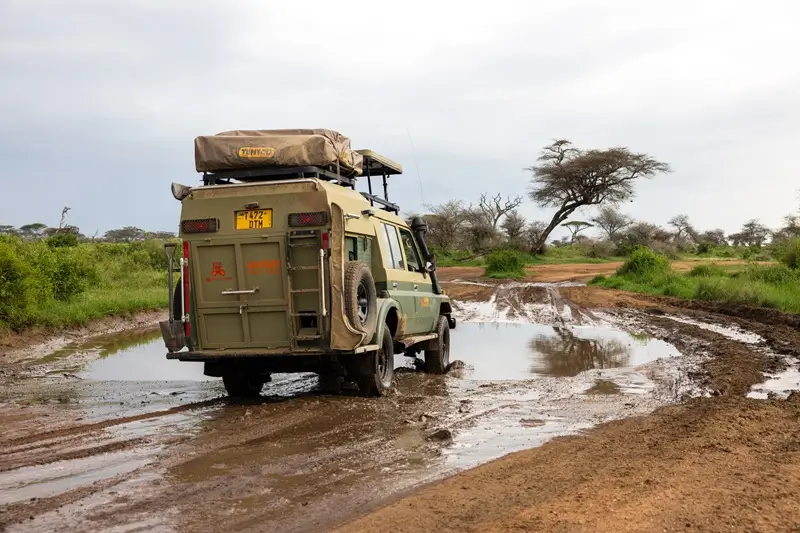
Early Information about the Masai Mara entry fees before masai mara self drive prevents budget surprises and helps plan your Kenyan safari accurately. The reserve charges multiple fee categories that accumulate quickly without proper preparation. This complete 2026 guide breaks down every cost you will encounter.
Masai Mara National Reserve represents Kenya’s premier wildlife destination, home to the spectacular Great Migration and year-round big cat sightings. However, this world-class experience comes at premium pricing compared to other Kenyan parks. Your entry fees fund critical conservation work protecting one of Africa’s most important ecosystems.
Safari Masters helps travelers navigate Masai Mara costs after 14 years facilitating self-drive safaris in Kenya. We explain current 2026 pricing, payment methods, and budget strategies. This guide ensures you understand exactly what you pay and why you pay.
Latest Masai Mara Entry Fees (2026)
The Masai Mara National Reserve operates under Narok County Government management with standardized fee structures. Rates vary significantly based on visitor category and age.
Current Entry Fees (Per Person, Per 24 Hours):
| Visitor Category | Adult Fee | Child Fee (3-17 years) |
| Foreign Non-Residents | $80 | $45 |
| Foreign Residents (with permits) | KES 2,000 (~$15) | KES 1,000 (~$8) |
| Kenyan Citizens | KES 1,000 (~$8) | KES 500 (~$4) |
| Children Under 3 | Free | Free |
Vehicle Entry Fees:
| Vehicle Type | Fee (Per 24 Hours) |
| Saloon Car (not recommended) | $50 |
| Safari 4×4 / Land Cruiser | $50-100 |
| Minibus (6-12 seats) | $100 |
| Large Bus | $150-200 |
Critical 24-Hour Rule:
Fees cover 24-hour periods from entry time, not calendar days. Entering at 3:00 PM means your fee expires at 3:00 PM the following day. Arriving Day 1 afternoon and departing Day 3 morning requires three full 24-hour fee payments per person.
Most international tourists fall into Foreign Non-Resident categories. East African residents with valid work permits or residence documentation qualify for reduced rates by presenting original permits at gates.
Masai Mara Conservancy Fees vs Reserve Fees
What Are Conservancies?
Private conservancies surround the main Masai Mara National Reserve on community-owned land. Local Maasai communities partnered with tourism operators creating exclusive wildlife areas with limited vehicle numbers and premium experiences.
Notable conservancies include Mara North Conservancy, Olare Motorogi Conservancy, Naboisho Conservancy, and Ol Kinyei Conservancy. These private zones operate independently from the main reserve with separate fee structures.
Conservancy vs Reserve Comparison:
| Feature | Main Reserve | Private Conservancies |
| Entry Fee (Adult FNR) | $80/day | $100-150/day |
| Vehicle Density | High (100+ vehicles) | Low (limited to 15-30) |
| Off-Road Driving | Prohibited | Often permitted |
| Night Drives | No | Yes (in some) |
| Walking Safaris | No | Yes (guided) |
| Wildlife Viewing | Excellent | Excellent to exceptional |
Why Conservancy Fees Are Higher:
Premium pricing reflects exclusivity and enhanced experiences. Conservancies limit visitor numbers, permit off-road driving, offer night drives, and allow walking safaris—privileges impossible in the main reserve. Revenue directly benefits Maasai landowners.
Budget travelers find excellent value in the main reserve at $80 daily with similar wildlife density. However, photographers and luxury travelers appreciate conservancy exclusivity at $120-150 daily for uncrowded experiences.
Total Cost of Visiting Masai Mara
Understanding complete costs requires adding multiple expense categories beyond entry fees.
Park Entry Fees
For a typical 3-day/2-night safari, two Foreign Non-Resident adults pay:
- Entry fees: 2 people × $80 × 3 days = $480
- Vehicle fees: $50 × 3 days = $150
- Total park fees: $630
Families with children benefit from reduced child rates. Two adults plus two children (ages 8 and 12) pay:
- Adults: 2 × $80 × 3 = $480
- Children: 2 × $45 × 3 = $270
- Vehicle: $50 × 3 = $150
- Total: $900
Vehicle Rental Costs (Self-Drive)
4×4 rental vehicles suitable for Masai Mara cost $170-200 daily including comprehensive insurance and unlimited mileage. Safari Masters provides fully equipped Toyota Land Cruisers at $170 daily.
Rooftop tent camping equipment adds approximately $20 daily to rental costs. This includes tent, bedding, cooking gear, chairs, and tables—everything needed for bush camping.
3-Day Vehicle Costs:
- Land Cruiser rental: $170 × 3 = $510
- Camping equipment: $20 × 3 = $60
- Total vehicle: $570
Fuel Costs
Budget $50-70 per day for fuel depending on driving distances. Masai Mara game drives typically cover 80-150 kilometers daily. Land Cruisers consume approximately 15-20 liters per 100 km.
Fill completely in Narok town before entering (no fuel stations exist in or near the reserve). Carry 20-40 liter jerry cans for multi-day trips.
3-Day Fuel Budget: $60 × 3 = $180
Accommodation or Camping Fees
Public Campsites: $30-40 per person per night (basic facilities, unfenced, authentic bush experience). 2 nights for 2 people: $140
Budget Lodges: $80-150 per person per night (basic rooms, meals often included). 2 nights for 2 people: $480
Mid-Range Lodges: $150-300 per person per night (comfortable rooms, full board, pools). 2 nights for 2 people: $800
Luxury Camps: $300-800+ per person per night (premium tented camps, gourmet meals). 2 nights for 2 people: $2,000
Guide Fees (Optional for Self-Drive)
Self-drive Masai Mara requires no mandatory guides. However, optional professional guides cost approximately $30-50 per day if desired for enhanced wildlife spotting and education.
Self-Drive Safari Costs in Masai Mara
Complete 3-Day Self-Drive Budget (2 People, Camping):
- Park entry fees: $480
- Vehicle fees: $150
- Land Cruiser rental: $510
- Camping equipment: $60
- Fuel: $180
- Camping fees: $140
- Food (self-catering): 2 × $25 × 3 = $150
- Total: $1,670 ($835 per person)
5-Day Self-Drive Budget (2 People, Camping):
- Park entry: 2 × $80 × 5 = $800
- Vehicle fees: $50 × 5 = $250
- Land Cruiser: $170 × 5 = $850
- Equipment: $20 × 5 = $100
- Fuel: $60 × 5 = $300
- Camping: 2 × $35 × 4 = $280
- Food: 2 × $25 × 5 = $250
- Total: $2,830 ($1,415 per person)
Self-Drive vs Guided Safari Comparison:
Comparable 3-day guided camping safaris cost $600-900 per person minimum. Guided lodge safaris run $1,000-2,000+ per person. Self-drive at $835 per person represents 30-50% savings while maintaining complete wildlife access.
Advantages of Self-Drive:
- Complete schedule flexibility (wake when you want, drive where interests take you)
- Unlimited time at wildlife sightings (no rushing for other clients)
- Significant cost savings for couples and groups
- Authentic adventure and personal achievement
- Photography freedom (position vehicles optimally, wait for perfect light)
Groups of four people sharing one vehicle reduce per-person costs dramatically to $420-500 per person for three days.
How to Pay Masai Mara Entry Fees
Gate Payment Process:
Most visitors pay directly at park gates upon entry. Main gates (Sekenani, Talek, Oloololo) have payment offices processing both cash and cards.
Accepted Payment Methods:
Cash USD: US dollars widely accepted. Bring clean, undamaged bills (no tears, heavy wear, or pre-2006 series). Gates provide limited change, so smaller denominations help ($20, $50 bills).
Credit/Debit Cards: Visa and Mastercard work at major gates through point-of-sale systems. However, machines malfunction occasionally. Never rely solely on cards—carry cash backup.
Mobile Money (M-Pesa): Kenyan mobile money systems work for residents and citizens. Foreign tourists rarely access M-Pesa, making this impractical for international visitors.
eCitizen Online System:
Kenya’s eCitizen portal allows some advance payments for certain parks. However, Masai Mara currently requires payment at gates rather than pre-booking through eCitizen for most visitors.
Tour operators and Safari Masters can arrange advance payments on clients’ behalf, streamlining entry and reducing gate delays.
Payment Timing:
Gates open 6:00 AM and close 6:00 PM daily. Arrive with time buffer for payment processing (15-45 minutes depending on queues). Peak season mornings see longest waits.
Print all booking confirmations and keep organized in waterproof folders. Rangers verify payments before granting access.
Best Time to Visit Masai Mara (Cost Impact)
Entry fees remain constant at $80 per person daily year-round. However, accommodation costs fluctuate dramatically with seasons.
High Season (July-October): Migration period with 50-100% higher lodge prices. Public camping fees constant. Spectacular wildlife but crowded viewing. Book 3-6 months ahead.
Shoulder Season (January-February, June, November-December): Excellent wildlife, fewer tourists, moderate lodge prices. Best value-quality balance.
Low Season (March-May): Long rains bring 30-60% lower lodge prices. Park fees unchanged. Lush landscapes, baby animals, minimal crowds but muddy roads.
Important Rules & Fee Policies
Re-Entry Rules:
Exiting and re-entering the same day still counts as one 24-hour period if within your original timeframe. However, exiting one day and returning the next requires new fee payment.
Some visitors stay outside the reserve (Talek, Sekenani areas) to avoid consecutive night camping fees while still doing daily game drives. This requires paying entry fees each day but eliminates overnight camping costs.
Vehicle Entry Regulations:
All vehicles require comprehensive insurance coverage. Rangers verify insurance certificates at gates. Foreign-registered vehicles sometimes face higher fees than Kenyan-plated vehicles.
Only 4×4 vehicles with high clearance are recommended (and often required) for Masai Mara access. Standard sedans face rejection at gates or struggle terribly on rough tracks.
Gate Operating Hours:
Strict 6:00 AM to 6:00 PM operations. No driving after dark inside the reserve. Being on roads after 6:00 PM results in substantial fines and potential expulsion. Plan all drives ensuring return to camps by 5:45 PM latest.
Children’s Policies:
Children under 3 enter completely free. Ages 3-17 pay reduced rates shown in fee tables. Proof of age through passports or birth certificates required.
Sample Budget for a Masai Mara Safari
Budget Self-Drive Traveler (Solo, 3 Days/2 Nights):
- Entry: $240 (1 × $80 × 3)
- Vehicle: $150 ($50 × 3)
- Rental: $510 ($170 × 3)
- Equipment: $60
- Fuel: $180
- Camping: $70 (1 × $35 × 2)
- Food: $75
- Total: $1,285
Mid-Range Couple (3 Days/2 Nights, Budget Lodges):
- Entry: $480
- Vehicle: $150
- Rental: $510
- Fuel: $180
- Lodges: $480 (2 × $120 × 2)
- Meals at lodges: $240
- Total: $2,040 ($1,020 per person)
Self-Drive Family (4 people: 2 adults, 2 children, 3 Days/2 Nights):
- Entry adults: $480
- Entry children: $270
- Vehicle: $150
- Rental: $510
- Equipment: $60
- Fuel: $180
- Camping: $280 (4 × $35 × 2)
- Food: $225
- Total: $2,155 ($539 per person)
The family scenario shows self-drive’s biggest value. Four people sharing costs create dramatic per-person savings impossible with individual tour bookings.
Tips to Save Money on Masai Mara Fees
Stay Outside the Reserve: Accommodations in Talek and Sekenani cost less than inside. Pay daily entry fees but save substantially on lodging. However, you miss magical dawn/dusk times when gates close to day visitors.
Travel Off-Season: March-May and November bring 30-60% lower accommodation. Park fees stay identical but lodge savings offset rainy season challenges.
Share Vehicle Costs: Four people sharing one rental 4×4 pay $420-500 each for three days versus $835 for couples.
Self-Cater When Camping: Cooking saves enormously. Budget $25 daily per person versus $40-60 for lodge meals. Shop in Narok before entering.
Why Choose a Self-Drive Safari in Kenya
Self-drive safaris offer unmatched freedom and value. You control wake-up times, routes, sighting duration, and daily plans. Professional guides increase spotting success but remove spontaneity.
Kenya’s infrastructure supports self-drive excellently with reliable roads, fuel stations, and services. Safari Masters facilitates successful adventures through reliable vehicles, comprehensive briefings, and 24/7 emergency assistance across East Africa.
Frequently Asked Questions
How much is Masai Mara entry fee per day?
Foreign non-residents pay $80 per adult per 24-hour period. Children ages 3-17 pay $45. Vehicle entry costs an additional $50-100 depending on type. Total for two adults with one vehicle equals $210 per day minimum.
Are fees paid per 24 hours or per day?
Fees cover 24-hour periods from entry time, not calendar days. Entering at 2:00 PM means your fee expires at 2:00 PM the following day. A typical 3-day safari requires three separate 24-hour fee payments.
Do I need to pay again if I exit the park?
Re-entering within your original 24-hour period typically does not require new payment. However, exiting one day and returning the next requires fresh fees. Check current policies at gates as enforcement varies.
Are conservancies more expensive than the reserve?
Yes, private conservancies charge $100-150 daily versus $80 for the main reserve. However, conservancies offer lower vehicle density, off-road driving privileges, night drives, and walking safaris justifying premium pricing for specific travelers.
Can I visit Masai Mara on a budget?
Absolutely. Self-drive camping keeps costs to approximately $835 per person for three days including all fees, vehicle rental, camping, and food. This represents substantial savings versus guided safari costs of $1,000-2,000+ per person.
Is self-drive allowed in Masai Mara?
Yes, completely allowed. No requirement exists for professional guides or rangers. Thousands of independent travelers self-drive Masai Mara annually. However, proper 4×4 vehicles prove essential for rough road conditions.
Plan Your Masai Mara Safari with Complete Fee Understanding
Understanding Masai Mara entry fees transforms abstract safari dreams into concrete budgets. You now know exactly what to expect financially when planning your adventure.
Safari Masters provides complete Masai Mara support including transparent fee breakdowns, reliable 4×4 vehicles, camping equipment, and expert planning assistance. Our 14 years facilitating Kenya safaris mean we navigate fee structures expertly while ensuring you pay correct amounts and receive proper documentation.
Contact Safari Masters today for personalized Masai Mara planning. We create accurate budgets showing park fees, vehicle costs, camping expenses, and complete trip totals. Your Masai Mara adventure begins with proper financial preparation and expert local knowledge.