


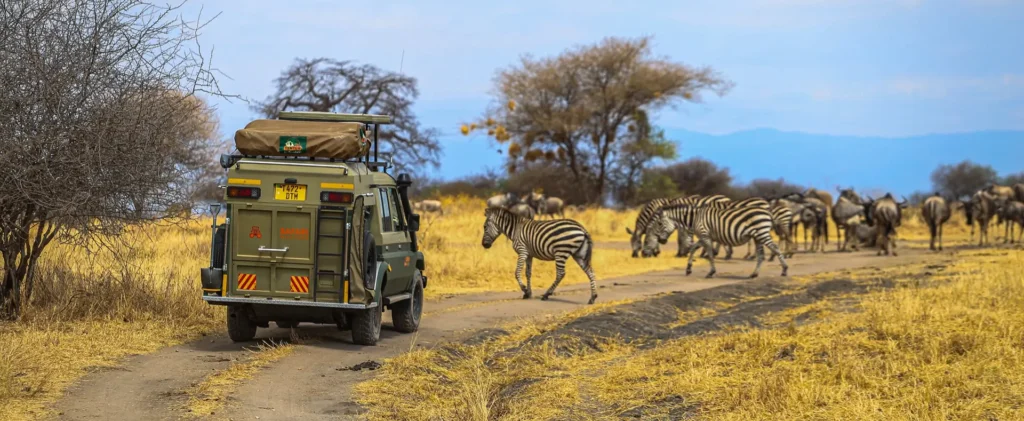
Planning a self-drive safari in Tanzania requires understanding current Tanzania entry requirements before departure. Foreign travelers must meet specific visa, vaccination, and documentation standards to enter the country. Understanding these requirements prevents delays at immigration and ensures smooth entry into Tanzania. Furthermore, self-drive travelers face additional documentation needs beyond standard tourist entry requirements. This comprehensive guide covers everything you need to enter Tanzania legally and start your adventure. We explain visa options, mandatory vaccinations, customs rules, and vehicle import documentation thoroughly. Additionally, recent policy changes have simplified some processes while maintaining security and health standards. Use this information to prepare all necessary documents well before your departure date.
Tanzania Visa Requirements
Most foreign nationals require a visa to enter Tanzania for tourism and safari purposes. However, Tanzania requirements for entry vary significantly depending on your passport and nationality. Several African countries enjoy visa-free entry agreements with Tanzania for stays up to 90 days. These include Kenya, Uganda, Rwanda, Burundi, and other East African Community member states. Citizens of Commonwealth countries like Malawi, Zambia, and Zimbabwe also enter visa-free for tourism. All other nationalities must obtain either an e-visa before travel or visa on arrival.
The Tanzania e-visa system represents the recommended and most convenient option for foreign travelers. You apply online through the official immigration website several weeks before your departure date. The e-visa typically costs 50 USD for single entry and 100 USD for multiple entries. Processing takes approximately 5 to 10 business days, though applying earlier provides safety buffer. Print your approved e-visa and present it alongside your passport at immigration upon arrival. The e-visa validity lasts 90 days from approval date, not from entry date specifically.
Alternatively, visa on arrival remains available at major entry points including airports and land borders. Kilimanjaro International Airport, Julius Nyerere International Airport, and land borders process arrival visas daily. The cost matches e-visa rates at 50 USD single entry or 100 USD multiple entry. However, queues can be long, especially during peak tourist season from June through October. Payment requires USD cash, and credit cards are not reliably accepted at all entry points. Therefore, the Tanzania entry visa process works more smoothly when completed online before travel.
Passport Validity Requirements
Your passport must remain valid for at least 6 months beyond your intended departure date. This standard rule applies universally regardless of your nationality or visa type chosen. Additionally, your passport must contain at least two blank visa pages for entry stamps. Immigration officials strictly enforce these requirements and deny entry to travelers with insufficient validity. Check your passport expiration date carefully when booking your Tanzania self-drive safari adventure. Renew your passport well in advance if it expires within 6 months of travel.
Yellow Fever Vaccination Certificate
Yellow fever vaccination represents a mandatory Tanzania entry requirement for travelers from endemic countries. You must present a valid yellow fever certificate if arriving from or transiting through endemic areas. Endemic countries include most of sub-Saharan Africa and parts of South America officially. The vaccination certificate becomes valid 10 days after vaccination and remains valid for life. Carry your original yellow fever card, not a photocopy, as immigration requires the physical document. Vaccination must be recorded in the official WHO International Certificate of Vaccination booklet format.
Even travelers from non-endemic countries should consider yellow fever vaccination for health protection purposes. Tanzania has areas where yellow fever transmission can occur, particularly in rural safari regions. Furthermore, many travelers combine Tanzania with other East African destinations requiring yellow fever proof. Getting vaccinated before travel eliminates concerns and provides important health protection during your safari.
COVID-19 Tanzania Entry Requirements
Tanzania covid entry requirements have evolved significantly since the pandemic began in 2020 initially. Currently, Tanzania has removed most COVID-19 related Tanzania entry restrictions for incoming travelers completely. Vaccination certificates are no longer required for entry regardless of vaccination status or origin country. PCR tests and rapid antigen tests are not required before arrival or upon entry. Health screening and temperature checks may still occur at entry points as standard procedures. However, requirements can change rapidly based on global health situations and new variant concerns.
Always verify current COVID-19 requirements on official Tanzania government websites before traveling to confirm. Health situations change quickly, and governments update policies based on WHO recommendations and local conditions. Checking 2 to 3 weeks before departure ensures you have the most accurate information. Additionally, your home country may have requirements for return entry that you must consider.
Arrival Form and Customs Declaration
Tanzania implemented an online arrival form system that travelers must complete before entry recently. The form collects basic information including passport details, accommodation addresses, and travel purpose clearly. Access the form through the official Tanzania immigration website 24 hours before your arrival. Complete the form digitally and save the confirmation code provided upon successful submission. Present this confirmation code to immigration officers when you arrive at the entry point.
Customs declaration forms are distributed on flights or available at land border crossing points. Declare all items of value including cameras, electronics, and currency amounts exceeding 10,000 USD. Self-drive travelers must declare temporary vehicle imports and related equipment like camping gear thoroughly. Honesty in declarations prevents complications and potential fines during customs inspection at entry. Keep all receipts for expensive equipment to prove ownership if customs officials request verification.
Vehicle Import Requirements for Self-Drive Travelers
Self-drive travelers bringing vehicles into Tanzania face specific documentation requirements beyond standard tourist entry. You need a valid international driving permit alongside your home country driving license always. The vehicle must have valid registration documents proving ownership or a notarized rental agreement. Temporary import permits allow foreign-registered vehicles to stay in Tanzania for up to 90 days. You must purchase third-party vehicle insurance at the border, as foreign insurance is invalid. Carnet de Passage documents facilitate vehicle import for overlanders driving their own vehicles internationally.
Customs officials inspect vehicles thoroughly at border crossings for contraband and prohibited items carefully. Remove any items that could be misinterpreted as goods for sale rather than personal use. Vehicle spare parts, camping equipment, and personal belongings should appear reasonable for safari duration. Additionally, you will pay road tolls and possibly local taxes depending on your route. Keep all vehicle-related documentation organized and easily accessible throughout your Tanzania self-drive adventure.
Tanzania Entry Requirements Rules and Prohibited Items
Tanzania entry rules prohibit certain items from being brought into the country for security reasons. Firearms and ammunition require special permits obtained well in advance through proper government channels. Drugs and narcotics face zero tolerance with severe penalties including imprisonment for violations. Pornographic materials, counterfeit goods, and endangered species products are strictly banned at entry. Additionally, large quantities of cigarettes and alcohol face heavy duties and taxation at customs.
Travelers can bring reasonable personal items including clothing, toiletries, and camping equipment without duties. Professional photography equipment is allowed but should be declared to avoid complications upon exit. Drones require special permits from Tanzania Civil Aviation Authority before bringing them into the country. Currency amounts exceeding 10,000 USD must be declared on arrival to comply with regulations. Self-drive travelers should carry vehicle ownership documents and insurance papers at all times during travel.
Health Insurance and Travel Insurance
While not mandatory, comprehensive travel insurance is highly recommended for all Tanzania visitors strongly. Medical facilities in rural areas are limited, and evacuation to Nairobi or back home costs thousands. Travel insurance should cover medical emergencies, evacuation, vehicle breakdowns, and trip cancellations comprehensively. Self-drive travelers especially need coverage for vehicle accidents, theft, and third-party liability claims. Verify that your policy covers adventure activities including game drives and possible wildlife encounters.
Many insurance providers exclude certain activities or require additional coverage for African safaris specifically. Read policy terms carefully and purchase appropriate coverage before departing from your home country. Keep insurance documentation accessible in both digital and physical formats during your entire trip. Emergency contact numbers for your insurance provider should be saved in your phone immediately.
Entry Points for Self-Drive Travelers
Tanzania offers multiple entry points for self-drive travelers arriving by road from neighboring countries. The Namanga border crossing connects Tanzania with Kenya and serves as the main Northern Corridor. Tunduma border links Tanzania with Zambia and handles significant overland traffic from Southern Africa. Sirari border provides access from Kenya directly into the Serengeti ecosystem for safari travelers. Horohoro border crossing connects Uganda with northwestern Tanzania near Lake Victoria and western parks.
Each border operates during specific hours, typically from early morning until early evening daily. Some smaller borders close on weekends and public holidays, so verify operating hours beforehand always. Border crossing procedures can take 1 to 3 hours depending on traffic and documentation completeness. Arrive with all documents ready and remain patient during the inspection and processing procedures. Officials may request small fees for processing, so carry USD cash for convenience and efficiency.
Tanzania Entry Requirements for Children and Minor
Children traveling to Tanzania must meet the same visa requirements as adult travelers completely. Each child needs their own passport with 6 months validity and blank visa pages. Parents or guardians must carry birth certificates for children traveling with them as proof. Single parents traveling alone with children should carry notarized consent letters from the other parent. This prevents child trafficking concerns and ensures smooth immigration processing at entry points consistently.
Unaccompanied minors require additional documentation including consent letters from both parents and guardians. The letters should include contact information and details about who receives the child in Tanzania. These requirements protect children and comply with international child safety standards implemented by Tanzania.
Final Tips About Tanzania Entry Requirements
Arrive at entry points with all Tanzania entry requirements documents organized and easily accessible. Print physical copies of your e-visa, accommodation bookings, and return flight tickets as backup. Keep vaccination certificates, insurance papers, and vehicle documents in a waterproof folder for protection. Remain polite and cooperative with immigration and customs officials throughout the entry process always.
Answer questions honestly and avoid volunteering unnecessary information that could complicate your entry unnecessarily. Have contact details for your first accommodation ready in case officials request verification. Carry sufficient USD cash for visa fees, insurance, and potential small border processing fees. Understanding and respecting Tanzania entry rules ensures you start your self-drive safari adventure smoothly.